
Bookkeeping Checklist for Small Businesses
Clean books don't happen by accident. Here's a practical monthly bookkeeping checklist for small businesses — what to record, reconcile and review so your filings always tie out.
On this page
Most small-business accounting problems trace back to one thing: books that weren't kept properly through the year. Here's a checklist to fix that.
Quick answer
Good bookkeeping is a monthly rhythm: record every transaction, reconcile the bank, track receivables and payables, set aside tax, and review a short report. Do it monthly and your GST, TDS and ITR simply tie out. Skip it and year-end becomes a painful, error-prone scramble.
The monthly bookkeeping checklist
- Record all income — every sale/invoice, categorised
- Record all expenses — bills and receipts, with GST split out
- Reconcile every bank account — books must match the statement
- Reconcile cards and wallets — not just the bank
- Update receivables — who owes you, and how overdue
- Update payables — what you owe, and when it's due
- Reconcile GST — sales/purchases vs what you'll file
- Set aside taxes — GST and advance tax, so they're not a shock
- Review a P&L snapshot — is the month profitable?
Separate business and personal — always
The single most common small-business mistake is mixing personal and business money. Use a dedicated business bank account and card. It makes bookkeeping (and tax) dramatically cleaner.
Keep your documents
- Sales invoices and purchase bills
- Expense receipts
- Bank and card statements
- Loan and asset records
A secure document vault beats a shoebox — and means nothing is lost at filing time.
Why monthly beats year-end
Monthly bookkeeping catches errors while they're fresh, keeps GST input credit from slipping, and gives you real visibility. Year-end-only bookkeeping means reconstructing 12 months from memory — that's where mistakes and missed credits live.
Common mistakes
- Mixing personal and business transactions
- Never reconciling the bank
- Letting bills pile up for year-end
- Not setting aside tax money
- Books that don't match GST/TDS filings
Run this checklist every month — or hand it to us — and your books stay clean and your filings reconcile.
Ready to act?
Get your books in order
We record, categorise and reconcile every month so your numbers are clean and your filings always tie out — no year-end scramble.
Frequently asked questions
What should a small business do for bookkeeping each month?
Record all income and expenses, reconcile every bank account and card, update receivables and payables, reconcile GST, set aside taxes, and review a short profit-and-loss snapshot.
Why is monthly bookkeeping better than year-end?
It catches errors while fresh, protects GST input credit, gives real visibility, and makes filings tie out — instead of reconstructing 12 months from memory at year-end.
Should I separate business and personal accounts?
Yes — a dedicated business bank account and card is the single biggest improvement to clean bookkeeping and tax.
What documents should I keep?
Sales invoices, purchase bills, expense receipts, bank and card statements, and loan/asset records — ideally in a secure document vault.
How does bookkeeping affect my GST and TDS?
Your GST and TDS filings are built on your books. Clean, reconciled books mean filings that match and fewer mismatch notices.
Can I do bookkeeping myself?
For very low volumes, yes, with discipline. As transactions grow, outsourcing to a monthly service keeps it accurate and frees your time.
What happens if I skip bookkeeping?
Year-end becomes a scramble, GST input credit can slip, errors creep in, and you lose visibility into how the business is actually doing.
Related MFA services
If you want this handled rather than done yourself, these are the matching services.
Written by
MyFinancialAdvisory Editorial
Editorial guidance prepared for business owners and reviewed before production publication.
Reviewed by MyFinancialAdvisory Compliance Team
Written against official sources, with the governing rule named wherever a figure or deadline is given. General guidance — not advice on your specific case.
Ready to act?
Get your books in order
We record, categorise and reconcile every month so your numbers are clean and your filings always tie out — no year-end scramble.
Related guides
Accounting & Payroll
Monthly Accounting Services for Startups
Year-end accounting is where startups discover their numbers were wrong all along. Monthly accounting fixes that. Here's why startups should account monthly, and what a good package covers.
Read guide
Accounting & Payroll
GST Accounting Explained: Keeping Books and Returns in Sync
GST touches every sale and purchase, so your books and your GST returns have to agree. Here's how GST flows through your accounting — and how to keep input credit from slipping.
Read guide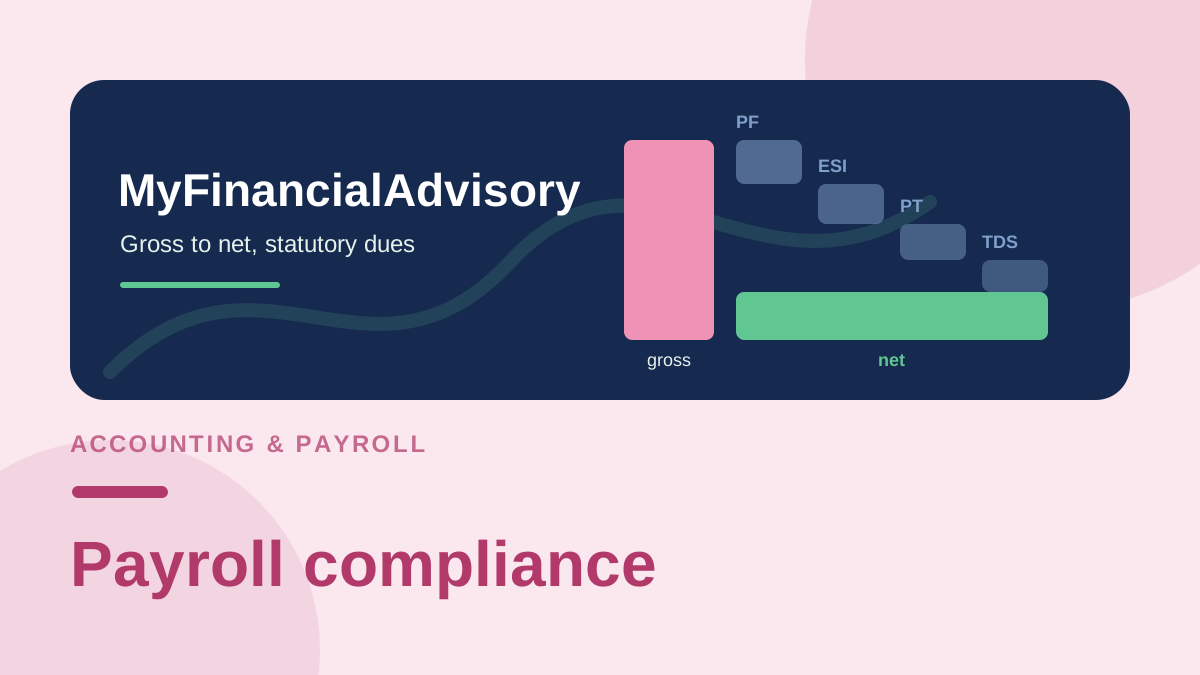
Accounting & Payroll
Payroll Compliance Checklist for Indian Employers
PF, ESI, professional tax and salary TDS — thresholds, the monthly and annual calendar, a CTC-to-net-pay worked example, and what actually changed when the four Labour Codes came into force on 21 November 2025.
Read guide