
DPIIT Recognition: Benefits and Process Explained
DPIIT recognition is the certificate that turns your company into an officially recognised startup — unlocking tax holidays, angel-tax exemption and IPR benefits. Here is what it gives you and how to get it.
On this page
DPIIT recognition is the gateway to India's startup benefits. The certificate itself is free; the value is in what it unlocks and whether you actually claim it.
Quick answer
DPIIT recognition is issued by the Department for Promotion of Industry and Internal Trade and confers official 'recognised startup' status. It's free, decided largely on how clearly you demonstrate innovation, and unlocks the 80-IAC tax holiday (separate approval), angel-tax exemption, IPR fast-tracking and rebates, and self-certification.
The benefits in detail
- 80-IAC tax holiday — three years of income-tax exemption within the first ten years, on a separate Inter-Ministerial Board application.
- Angel-tax exemption — relief from angel tax on eligible investments.
- IPR fast-track & rebates — speedier patents/trademarks, government-borne facilitator fees, and fee rebates.
- Self-certification — under several labour and environment laws for an initial period.
How to get recognised
- Be eligible: a Pvt Ltd, LLP or registered partnership, within 10 years and under the turnover ceiling.
- Build your Startup India profile.
- Submit a specific, credible innovation write-up.
- Apply and respond to any queries — recognition typically follows in 1–3 weeks.
The innovation test is everything
Most rejections come down to a vague innovation description. Show what's genuinely novel, improvable or scalable about your product or model, backed by traction, IP or a clear differentiator.
Common mistakes
- A generic, non-specific innovation note
- Assuming recognition gives the tax holiday automatically
- Applying with an ineligible entity type
- Not claiming the benefits afterwards
Recognition is straightforward when your innovation story is clear — and genuinely valuable when you put the benefits to use.
Ready to act?
Get officially recognised
We craft a compelling innovation case and secure your DPIIT recognition — then help you claim every benefit.
Frequently asked questions
What is DPIIT recognition?
An official certificate granting recognised-startup status under Startup India, issued by DPIIT. It unlocks tax, angel-tax, IPR and self-certification benefits.
Is DPIIT recognition the same as Startup India registration?
Largely yes — DPIIT recognition is the certificate, and Startup India registration is the process of getting it and claiming benefits.
Is there a fee for DPIIT recognition?
No government fee. The deciding factor is a clear, specific innovation write-up.
Does recognition give an automatic tax holiday?
No. The 80-IAC three-year tax holiday is a separate application to the Inter-Ministerial Board for eligible recognised startups.
What is angel-tax exemption?
Recognised startups can be exempt from angel tax on eligible share-premium investments, subject to conditions.
Why are applications rejected?
Most often because innovation isn't clearly demonstrated, or the entity is ineligible by type, age or turnover.
Related MFA services
If you want this handled rather than done yourself, these are the matching services.
Written by
MyFinancialAdvisory Editorial
Editorial guidance prepared for business owners and reviewed before production publication.
Reviewed by MyFinancialAdvisory Compliance Team
Written against official sources, with the governing rule named wherever a figure or deadline is given. General guidance — not advice on your specific case.
Ready to act?
Get officially recognised
We craft a compelling innovation case and secure your DPIIT recognition — then help you claim every benefit.
Related guides
Startup Compliance
Startup India Registration Guide: Eligibility, Process & Benefits
Startup India recognition unlocks tax holidays, angel-tax exemption, IPR rebates and easier procurement. Here is who qualifies, how to apply, and how to actually claim the benefits.
Read guide
Company Registration
Private Limited Company Registration Process in India
The full SPICe+ route, form by form — name reservation, Part B, eMoA/eAoA, AGILE-PRO-S, the government fees that actually apply, why applications get sent back, and every post-incorporation deadline with the section behind it.
Read guide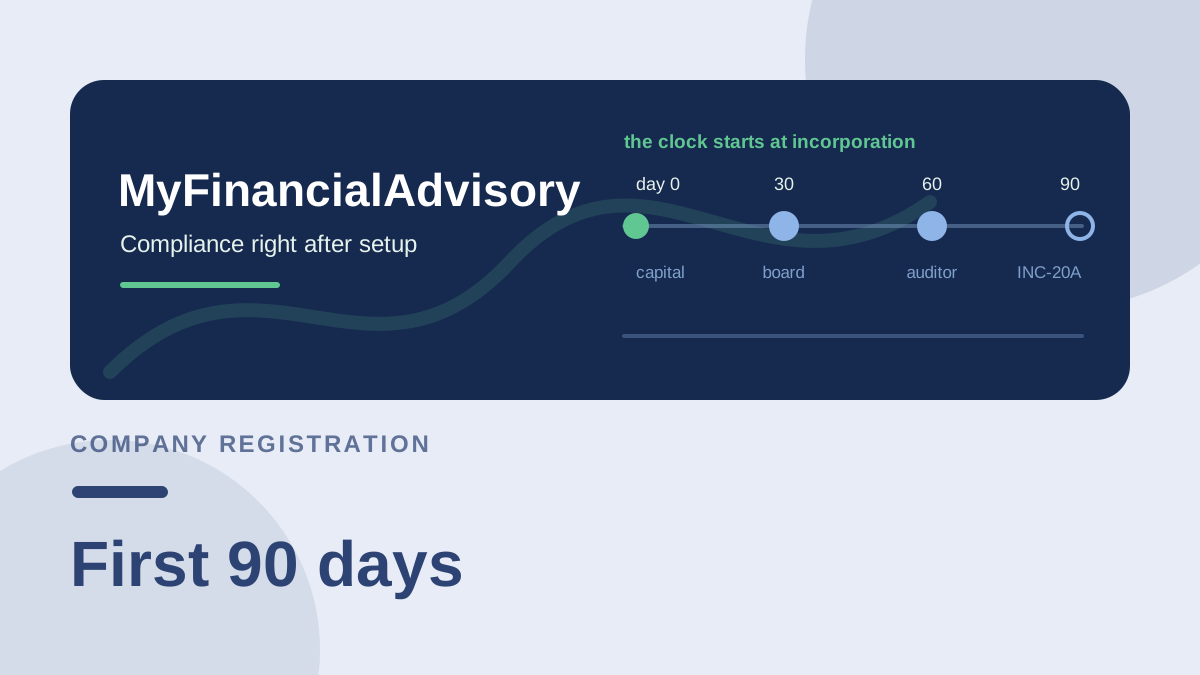
Company Registration
Post-Incorporation Compliance for a Private Limited Company
Incorporation is day one — the compliance clock starts immediately. Here is the first-year checklist every Private Limited Company must follow: INC-20A, auditor, share certificates, KYC and annual filings.
Read guide