
The GST LUT — Exporting Without Paying IGST, and the Two Deadlines That Withdraw It
A Letter of Undertaking lets you export without paying IGST at all. Almost every registered person is eligible, the old ₹1 crore remittance test died in 2017, and the two deadlines that can withdraw the facility are different lengths for goods and for services — one of which was quietly rewritten in July 2024.
On this page
- Quick answer
- Who this is for
- The two routes for a zero-rated supply
- Eligibility: the test that changed in 2017 and is still being quoted
- What the LUT is, physically
- The undertaking: what you are actually promising
- Goods — three months plus fifteen days
- Services — one year, or the FEMA period, whichever is later
- The two deadlines side by side
- What "called in" actually means
- A worked example, with assumptions on the table
- The export data has to agree with your returns
- SEZ supplies are covered by the same instrument
- Exports still count toward your registration threshold
- What it costs
- Common mistakes
- What to do next
- Sources and currency
If you sell to customers outside India, or to a unit in a Special Economic Zone, you have a choice about cash. You can charge integrated tax on the invoice, pay it, and then apply to get it back. Or you can furnish a Letter of Undertaking and not pay it at all.
Almost every exporter should be doing the second. Yet a surprising number are still told they cannot, on the strength of an eligibility test that was superseded in October 2017. And of those who do file, many carry a version of the deadlines that stopped being accurate in July 2024.
This guide takes the position from the two instruments that actually govern it: Rule 96A of the CGST Rules, and Notification 37/2017-Central Tax.
Quick answer
A Letter of Undertaking in FORM GST RFD-11, furnished before you export, lets you supply zero-rated goods, services or SEZ supplies without paying integrated tax. All registered persons are eligible except one prosecuted for an offence where tax evaded exceeds ₹2.5 crore. It runs for a financial year. Two deadlines can call it in: three months plus fifteen days for goods not exported, and one year — or the FEMA-permitted period including any RBI extension, whichever is later — plus fifteen days for services not paid for.
Who this is for
Exporters of goods. Freelancers and consultancies billing overseas clients. Software and services businesses with foreign revenue. Domestic suppliers to SEZ units and developers. Anyone who has been told they need a bank guarantee or a bond, and anyone whose accountant renews the LUT every April without knowing why it is annual.
The two routes for a zero-rated supply
Exports and SEZ supplies are zero-rated. That is not the same as exempt: the supply is taxable at an effective rate of nil, and — critically — the input tax credit on everything that went into it stays available. That distinction is the whole reason zero-rating exists.
There are two ways to take the benefit:
| Route | What you do | Cash effect |
|---|---|---|
| Pay and refund | Charge IGST on the export invoice, pay it, then claim a refund | Money leaves now, comes back later |
| LUT under Rule 96A | Furnish an undertaking in advance, invoice without IGST | Money never leaves |
On a ₹50 lakh export month at 18%, the difference is ₹9 lakh sitting in a refund queue instead of in your business. For a services exporter with thin working capital, that is not a preference. It is the difference between taking the contract and not.
Eligibility: the test that changed in 2017 and is still being quoted
Notification 37/2017-Central Tax, dated 4 October 2017, was issued under section 54 of the CGST Act, section 20 of the IGST Act and Rule 96A(5), and expressly in supersession of Notification 16/2017-Central Tax. Its first condition reads:
"all registered persons who intend to supply goods or services for export without payment of integrated tax shall be eligible to furnish a Letter of Undertaking in place of a bond except those who have been prosecuted for any offence under the Central Goods and Services Tax Act, 2017 … or the Integrated Goods and Services Tax Act, 2017 … or any of the existing laws in force in a case where the amount of tax evaded exceeds two hundred and fifty lakh rupees"
Read that carefully, because three things follow.
The default is eligibility. The notification does not list who qualifies; it makes everyone eligible and then carves out one class. If you are registered and you intend to export, you are in.
The single disqualification is narrow. It requires prosecution for an offence, and it requires the tax evaded in that case to exceed ₹2.5 crore. A pending enquiry is not prosecution. A disputed demand is not prosecution. A prosecution for an offence involving ₹40 lakh is not above the threshold.
The old test is dead. Notification 16/2017-Central Tax restricted LUTs to exporters who had received foreign inward remittance of at least ₹1 crore or 10% of export turnover, or who were status holders. That was superseded on 4 October 2017. It is still repeated in checklists, in bank guidance and by advisors working from stale notes, and it wrongly pushes small exporters toward furnishing a bond — with the bank guarantee and blocked margin money that goes with one.
What the LUT is, physically
Clause (ii) of the same notification is unusually specific about form:
"the Letter of Undertaking shall be furnished on the letter head of the registered person, in duplicate, for a financial year in the annexure to FORM GST RFD – 11 … and it shall be executed by the working partner, the Managing Director or the Company Secretary or the proprietor or by a person duly authorised by such working partner or Board of Directors of such company or proprietor"
Two useful consequences. First, this is where the annual cycle comes from — Rule 96A itself says nothing about periodicity, so anyone who tells you the LUT is "valid for a year" is, correctly, quoting the notification rather than the rule. Second, the signing authority is specified. It is not any authorised signatory on the GST portal: it is the working partner, MD, Company Secretary or proprietor, or someone they have properly authorised. Getting that wrong is a rejection reason, and it is the sort of thing that surfaces at the worst moment.
The undertaking: what you are actually promising
An LUT is not a registration. It is a binding undertaking to pay the tax you did not pay, if the export does not complete. Rule 96A(1) sets the promise out:
"Any registered person availing the option to supply goods or services for export without payment of integrated tax shall furnish, prior to export, a bond or a Letter of Undertaking in FORM GST RFD-11 to the jurisdictional Commissioner, binding himself to pay the tax due along with the interest specified under sub-section (1) of section 50 within a period of —"
And then the two deadlines. They are different lengths, and they are triggered by different failures.
Goods — three months plus fifteen days
"(a) fifteen days after the expiry of three months … from the date of issue of the invoice for export, if the goods are not exported out of India"
The trigger is physical: the goods did not leave India. The clock starts at the date of the export invoice, not the date of the shipping bill, the booking or the container handover. The Commissioner may allow a further period, but that is an application, not an entitlement.
Services — one year, or the FEMA period, whichever is later
This is the limb that was rewritten. Clause 20 of Notification 12/2024-Central Tax, dated 10 July 2024, substituted clause (b) to read:
"(b) fifteen days after the expiry of one year, or the period as allowed under the Foreign Exchange Management Act, 1999 … including any extension of such period as permitted by the Reserve Bank of India, whichever is later, from the date of issue of the invoice for export … if the payment of such services is not received by the exporter in convertible foreign exchange or in Indian rupees, wherever permitted by the Reserve Bank of India."
The trigger here is financial: the money did not arrive. And the deadline is no longer a flat year. If your realisation period under FEMA — including any extension the RBI has permitted — runs beyond twelve months, that longer period governs. A services exporter who has an RBI-permitted extension is not in breach on the first anniversary of the invoice, and a great deal of published guidance, written before July 2024, says otherwise.
The two deadlines side by side
| Goods | Services | |
|---|---|---|
| What triggers it | Goods not exported out of India | Payment not received in convertible foreign exchange |
| Base period | Three months | One year, or the FEMA-permitted period including any RBI extension — whichever is later |
| Grace | 15 days | 15 days |
| Runs from | Date of the export invoice | Date of the export invoice |
| Extension | Such further period as the Commissioner may allow | Such further period as the Commissioner may allow |
| Source | Rule 96A(1)(a) | Rule 96A(1)(b), as substituted by N. 12/2024-CT |
Note what both share: the clock runs per export invoice, not per financial year. A single stalled shipment or one non-paying client can call the undertaking in while the rest of your export book is perfectly healthy.
What "called in" actually means
Rule 96A(3) is blunt:
"Where the goods are not exported within the time specified in sub-rule (1) and the registered person fails to pay the amount mentioned in the said sub-rule, the export as allowed under bond or Letter of Undertaking shall be withdrawn forthwith and the said amount shall be recovered from the registered person in accordance with the provisions of section 79."
Section 79 is the recovery machinery — the same one used for any unpaid determined amount. Clause (iii) of Notification 37/2017-Central Tax says the same thing in its own words: the facility "will be deemed to have been withdrawn".
But it is not permanent. Rule 96A(4): "The export as allowed under bond or Letter of Undertaking withdrawn in terms of sub rule (3) shall be restored immediately when the registered person pays the amount due." So the sequence is: miss the deadline, owe the tax and interest, lose the facility, pay, get the facility back. In the interval, further exports have to carry IGST and go through the refund cycle.
A worked example, with assumptions on the table
Assume a software consultancy raises an export invoice on 1 May 2026 for US$60,000, converted at an assumed ₹86 to the dollar — ₹51,60,000. It holds a valid LUT for FY 2026-27, so no IGST is charged. Assume the supply would otherwise have attracted 18% IGST, and that the client does not pay.
Assume, first, no FEMA extension: the realisation period is one year. The Rule 96A(1)(b) clock expires on 1 May 2027, plus fifteen days — so the tax falls due on 16 May 2027. The amount is 18% of ₹51,60,000 = ₹9,28,800, plus interest under section 50(1) at the notified 18% per annum running from that due date. At 90 days beyond it, interest is roughly ₹41,200, and it keeps running until paid. The facility is withdrawn under Rule 96A(3) in the meantime, so any exports invoiced after that point carry IGST until the amount is cleared and Rule 96A(4) restores it.
Now assume instead that the RBI has permitted an extension of the realisation period to eighteen months. The "whichever is later" limb applies, the clock expires on 1 November 2027 plus fifteen days, and on the same facts nothing is due on 16 May 2027 at all. Same invoice, same non-payment, six months of difference — decided entirely by a limb that entered the rule in July 2024.
Figures are illustrative. The exchange rate and the tax rate are assumptions stated so you can substitute your own; the interest rate and the deadlines are from the instruments cited.
The export data has to agree with your returns
Rule 96A(2) links the LUT to your filing:
"The details of the export invoices contained in FORM GSTR-1, as amended in FORM GSTR-1A if any, furnished on the common portal shall be electronically transmitted to the system designated by Customs and a confirmation that the goods covered by the said invoices have been exported out of India shall be electronically transmitted to the common portal from the said system."
The words "as amended in FORM GSTR-1A if any" were inserted by the same Notification 12/2024-Central Tax that rewrote clause (b). The practical point: your export invoice details travel from GSTR-1 to Customs and the confirmation of export travels back. A wrong shipping bill number or a mismatched invoice value in the return does not stay a return problem — it stalls the matching on the Customs side. The GSTR-1A window, open after GSTR-1 and before GSTR-3B for the same period, is the cheapest place to fix it.
SEZ supplies are covered by the same instrument
Rule 96A(6): the provisions of sub-rule (1) apply mutatis mutandis to zero-rated supply of goods or services to a Special Economic Zone developer or unit without payment of integrated tax. Paragraph 2 of Notification 37/2017-Central Tax mirrors that, and expressly covers supplies made by a registered person including an SEZ developer or unit to an SEZ developer or unit.
So a domestic vendor billing an SEZ unit uses the same LUT, on the same terms, with the same deadlines. There is no separate instrument to obtain.
Exports still count toward your registration threshold
A point that catches freelancers and small consultancies, and it has nothing to do with the LUT itself.
Section 2(6) defines aggregate turnover to include "exports of goods or services or both" along with taxable supplies, exempt supplies and inter-State supplies "of persons having the same Permanent Account Number, to be computed on all India basis". Zero-rated does not mean invisible.
A developer earning ₹25 lakh entirely from US clients is over the ₹20 lakh services threshold and liable to register, even though the eventual GST collected on that work is nil. Registration comes first; the LUT is what you do once you have it. If you are working out whether you are there yet, GST for freelancers sets out how the threshold is measured.
What it costs
Nothing, to file — and that is worth stating precisely rather than loosely.
No fee is prescribed in Rule 96A or in Notification 37/2017-Central Tax for furnishing FORM GST RFD-11. That is a narrow claim about what the instruments require, and it is the only one supportable from them.
The cost of an LUT is contingent, not upfront. What you are taking on is the obligation in Rule 96A(1): if the export does not complete on either limb, you owe the integrated tax you did not charge, plus section 50(1) interest at the notified 18% per annum, recoverable under section 79. Priced properly, an LUT is not a free document. It is self-insurance, and it is almost always the right trade — but it is a trade.
Any professional fee for preparing and filing it is a private charge and has nothing to do with what the government levies. Ours is set out on the GST LUT filing page.
Common mistakes
- Believing the ₹1 crore remittance or status-holder test still applies. It was superseded on
4 October 2017 by Notification 37/2017-Central Tax.
- Renewing in April. Rule 96A(1) requires the undertaking prior to export, and clause (ii) of the
notification makes it a financial-year document. Exports invoiced on 1 April need the new LUT already in place.
- Quoting a flat one-year deadline for services. Since 10 July 2024, Rule 96A(1)(b) gives one year
or the FEMA-permitted period including any RBI extension, whichever is later.
- Starting the clock at the shipping bill. Both limbs run from the **date of issue of the invoice for
export**.
- Tracking the LUT annually instead of per invoice. The deadlines attach to each export invoice.
- Having the wrong person sign. Clause (ii) names the working partner, Managing Director, Company
Secretary or proprietor, or a person duly authorised by them.
- Assuming a lapse is permanent. Rule 96A(4) restores the facility immediately on payment.
- Confusing zero-rated with exempt. Zero-rated preserves your input tax credit;
exempt does not.
What to do next
If you export and do not hold an LUT, check the single disqualification in Notification 37/2017-Central Tax and file. If you hold one, put two things in your calendar: the March renewal, and a per-invoice ageing report against the three-month and one-year limbs. Almost every LUT problem we see is one of those two, and both are diary problems rather than legal ones.
We handle the filing, the renewal and the deadline tracking under GST LUT filing.
Sources and currency
Applies to: India, CGST Rules 2017 and Notification 37/2017-Central Tax as in force on 20 August 2026
Rule 96A was read in full on CBIC's live rules repository on 20 August 2026, and Notification 37/2017-Central Tax and Notification 12/2024-Central Tax were read as decoded PDF text from official hosts on the same day. Two limits are worth stating. A complete enumeration of Central Tax notifications up to the CBIC repository's ceiling of approximately 30 June 2026 found nothing further amending Rule 96A or Notification 37/2017, but mirror State notifications were not enumerated. And what the GST portal presents to a given entity type could not be verified, because gst.gov.in is not machine-readable from here — so confirm the on-screen flow before relying on any description of it.
- CGST Rules 2017, Rule 96A — export of goods or services under bond or Letter of Undertaking
- Notification 37/2017-Central Tax, 4 October 2017 — conditions and safeguards for furnishing an LUT in place of a bond
- Notification 12/2024-Central Tax, 10 July 2024 — clause 20 substitutes Rule 96A(1)(b)
- CGST Act 2017, section 50 — interest on delayed payment of tax
- CGST Act 2017, section 79 — recovery of tax
- CGST Act 2017, section 2 — definitions, including aggregate turnover in section 2(6)
- CGST Rules 2017, Rule 59 — GSTR-1 and GSTR-1A, which carry the export invoice details transmitted to Customs
Frequently asked questions
Who is eligible to file a GST LUT?
Almost everyone who exports. Notification 37/2017-Central Tax, issued under Rule 96A(5), provides that all registered persons who intend to supply goods or services for export without payment of integrated tax are eligible to furnish a Letter of Undertaking in place of a bond, with a single exception: a person who has been prosecuted for an offence under the CGST Act, the IGST Act or any existing law in force in a case where the amount of tax evaded exceeds two hundred and fifty lakh rupees. Note that the test is prosecution for an offence at that scale, not a pending enquiry, an assessment, or an outstanding demand. The earlier eligibility test — foreign inward remittance of at least ₹1 crore or 10% of export turnover, or status-holder recognition — came from Notification 16/2017-Central Tax, which Notification 37/2017 expressly superseded on 4 October 2017.
Is the GST LUT valid for a financial year or forever?
For a financial year. That periodicity does not come from Rule 96A, which is silent on it, but from clause (ii) of Notification 37/2017-Central Tax: the Letter of Undertaking shall be furnished on the letter head of the registered person, in duplicate, for a financial year, in the annexure to FORM GST RFD-11. It follows that the renewal has to be in place before you export in the new year, because Rule 96A(1) requires the undertaking to be furnished prior to export. Exports invoiced on 1 April are not covered by the previous year's LUT.
What happens if my export goods are never shipped?
Rule 96A(1)(a) makes the tax payable, with interest under section 50(1), within fifteen days after the expiry of three months from the date of issue of the invoice for export — or such further period as the Commissioner may allow — if the goods are not exported out of India. Note that the clock runs from the date of the export invoice, not from the shipping bill or the date the container was booked. Rule 96A(3) then provides that the export allowed under bond or Letter of Undertaking shall be withdrawn forthwith and the amount recovered under section 79, and Rule 96A(4) restores the facility immediately once the amount due is paid.
How long do I have to receive payment from an overseas client under an LUT?
Longer than the flat one year most guidance quotes. Rule 96A(1)(b), as substituted by Notification 12/2024-Central Tax with effect from 10 July 2024, gives fifteen days after the expiry of one year, or the period as allowed under the Foreign Exchange Management Act 1999 including any extension of such period as permitted by the Reserve Bank of India, whichever is later, from the date of issue of the invoice for export — or such further period as the Commissioner may allow — if the payment for the services is not received by the exporter in convertible foreign exchange or in Indian rupees, wherever permitted by the Reserve Bank of India. So an exporter operating inside an RBI-permitted extension is not in breach on the anniversary of the invoice.
Does an LUT cover supplies to a Special Economic Zone?
Yes. Rule 96A(6) applies the provisions of sub-rule (1) mutatis mutandis to zero-rated supply of goods or services or both to a Special Economic Zone developer or a Special Economic Zone unit without payment of integrated tax, and paragraph 2 of Notification 37/2017-Central Tax says the same of that notification, expressly including supplies made by an SEZ developer or unit to another. A domestic supplier billing an SEZ unit does not need a separate instrument.
Do exports count toward my ₹20 lakh GST registration threshold?
Yes. Section 2(6) defines aggregate turnover to include exports of goods or services, alongside taxable supplies, exempt supplies and inter-State supplies of persons having the same Permanent Account Number, computed on an all-India basis. Zero-rated is not the same as outside the count — it means the supply is taxable at a nil effective rate with credit preserved, not that it is invisible to the threshold. A consultant billing ₹25 lakh entirely to overseas clients is over the registration threshold, even though no GST is ultimately collected on that work.
Is there a government fee for filing a GST LUT?
Neither Rule 96A nor Notification 37/2017-Central Tax prescribes a fee for furnishing FORM GST RFD-11. Publish that narrowly rather than as "the LUT is free": the cost of an LUT is not the filing, it is the contingent liability you take on. If the undertaking is called in under Rule 96A(1), you owe the integrated tax you did not pay plus interest at the notified 18% per annum under section 50(1), recoverable under section 79. Any professional fee for preparing and filing it is a private charge and separate from anything the government levies.
Can I file an LUT after I have already exported?
Not for the supplies already made. Rule 96A(1) requires the bond or Letter of Undertaking to be furnished prior to export, so invoices raised before it is in place are not covered by it. For those supplies the route is to pay integrated tax and claim a refund, which is exactly the working-capital cycle the LUT exists to avoid. The practical lesson is at the year boundary: file the renewal in March rather than in April.
Related MFA services
If you want this handled rather than done yourself, these are the matching services.
Written by
MyFinancialAdvisory Editorial
Editorial guidance prepared for business owners and reviewed before production publication.
Written against official sources, with the governing rule named wherever a figure or deadline is given. General guidance — not advice on your specific case.
Ready to act?
File your LUT before the financial year turns
We check eligibility against the single disqualification in Notification 37/2017, file FORM GST RFD-11 for the year, and track the Rule 96A deadlines per export invoice so the undertaking is never called in by surprise.
Related guides
GST
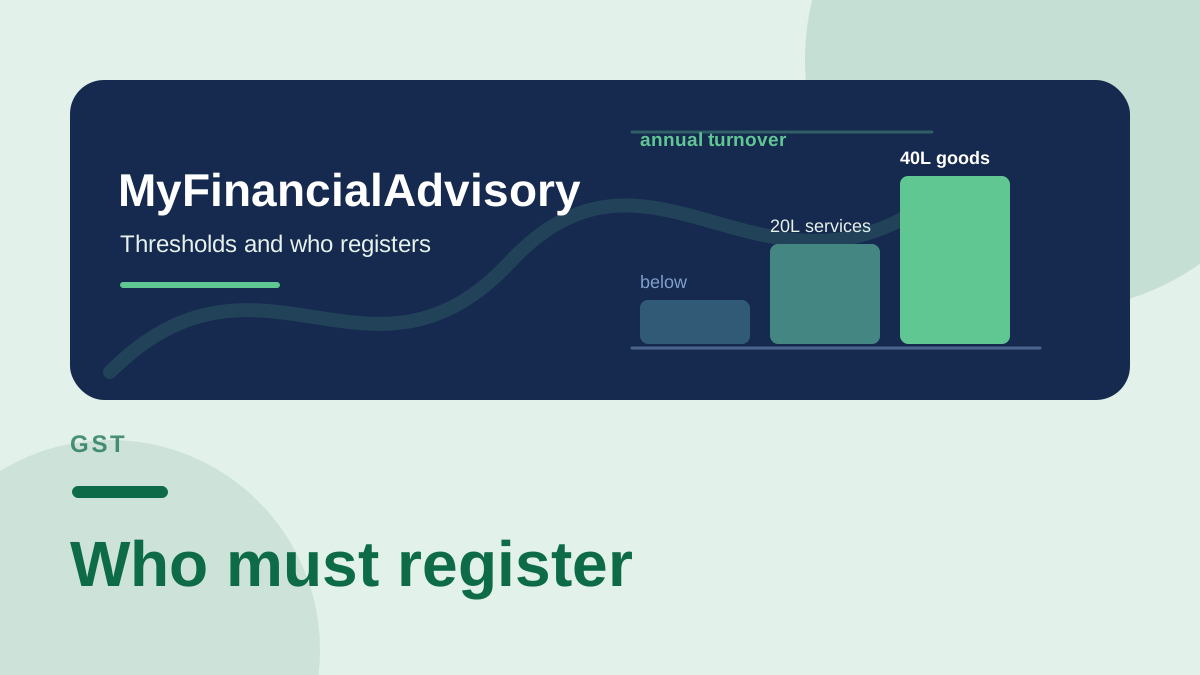
GST Registration for Freelancers: Do You Really Need It?
Freelancers and consultants often over- or under-register for GST. Here is a straight answer on when you need it, what export of services means, and how an LUT protects your cash flow.
Read guide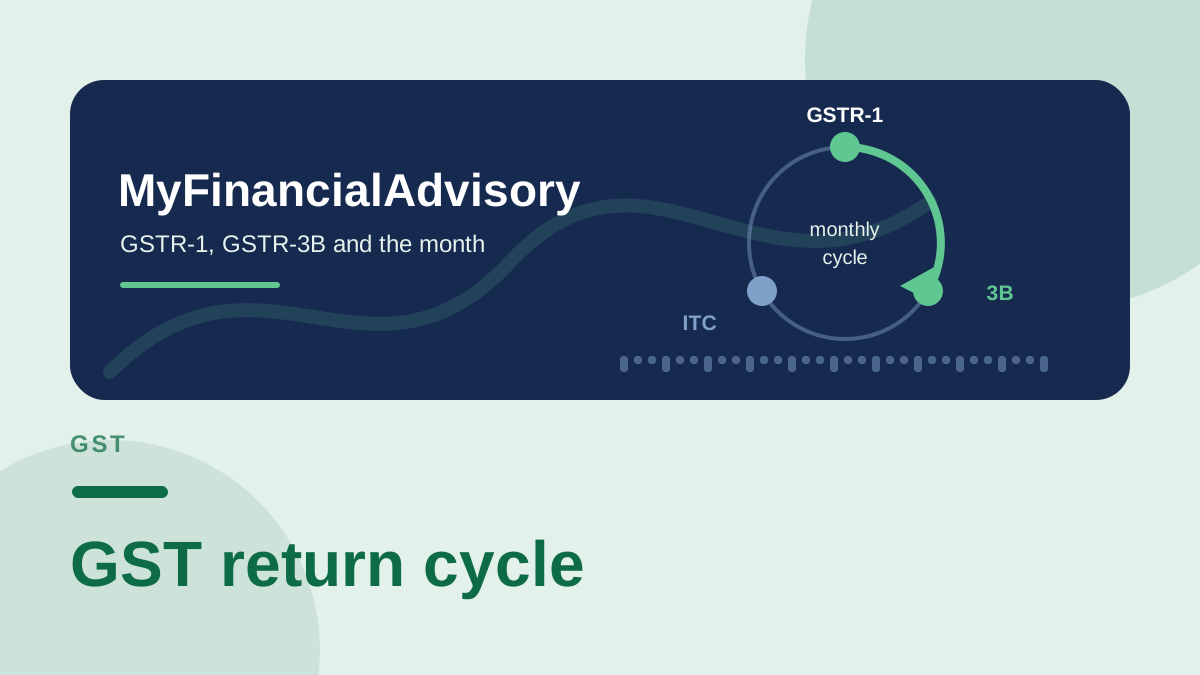
GST
GST Return Filing Guide
The GST return cycle taken from the CGST Act and Rules — what GSTR-1 and GSTR-3B each do, the real due dates and which ones are only for QRMP filers, the annual return thresholds, late fees with their caps, and the three-year bar that now closes old periods for good.
Read guide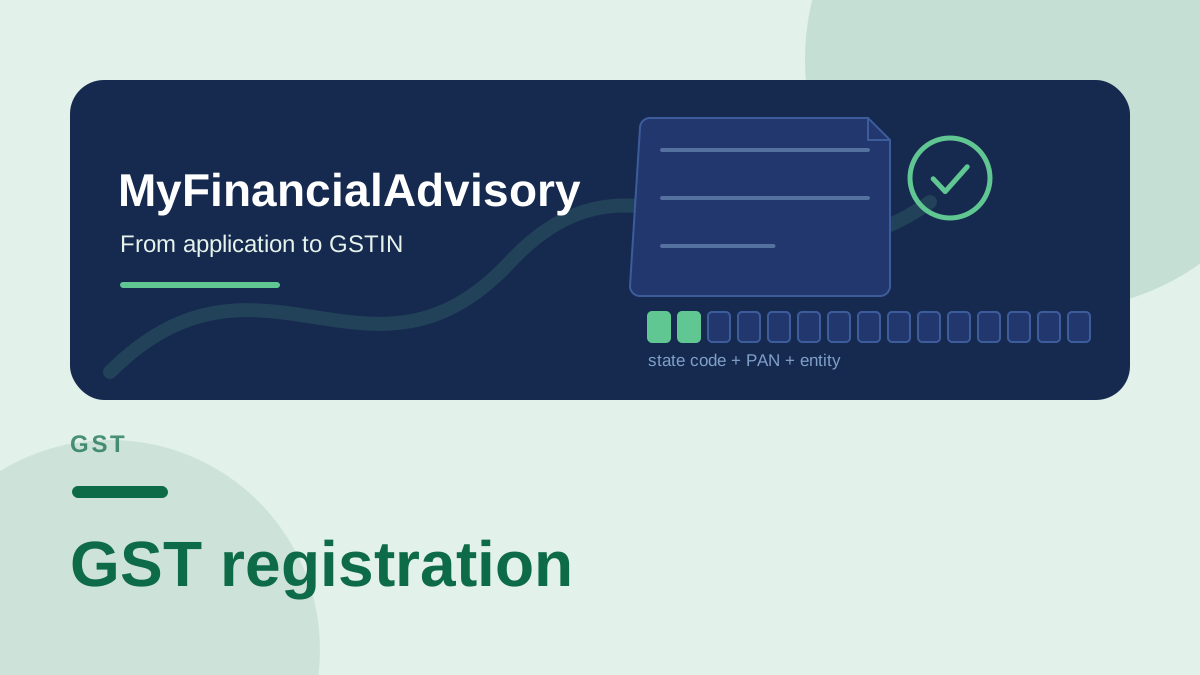
GST
GST Registration Process in India
What the CGST Act and Rules actually require to get a GSTIN — the real turnover thresholds State by State, the thirty-day clock and what missing it costs, the REG-01 to REG-06 sequence, and the rejection paths with a way out of each.
Read guide