
International Trademark Registration Guide: The Madrid Protocol
Protecting your brand in many countries one-by-one is slow and costly. The Madrid Protocol lets you file internationally from one application. Here's how it works.
On this page
Once you sell across borders, brand protection has to follow. Filing country-by-country is painful — the Madrid Protocol is the smarter route. Here's the guide.
Quick answer
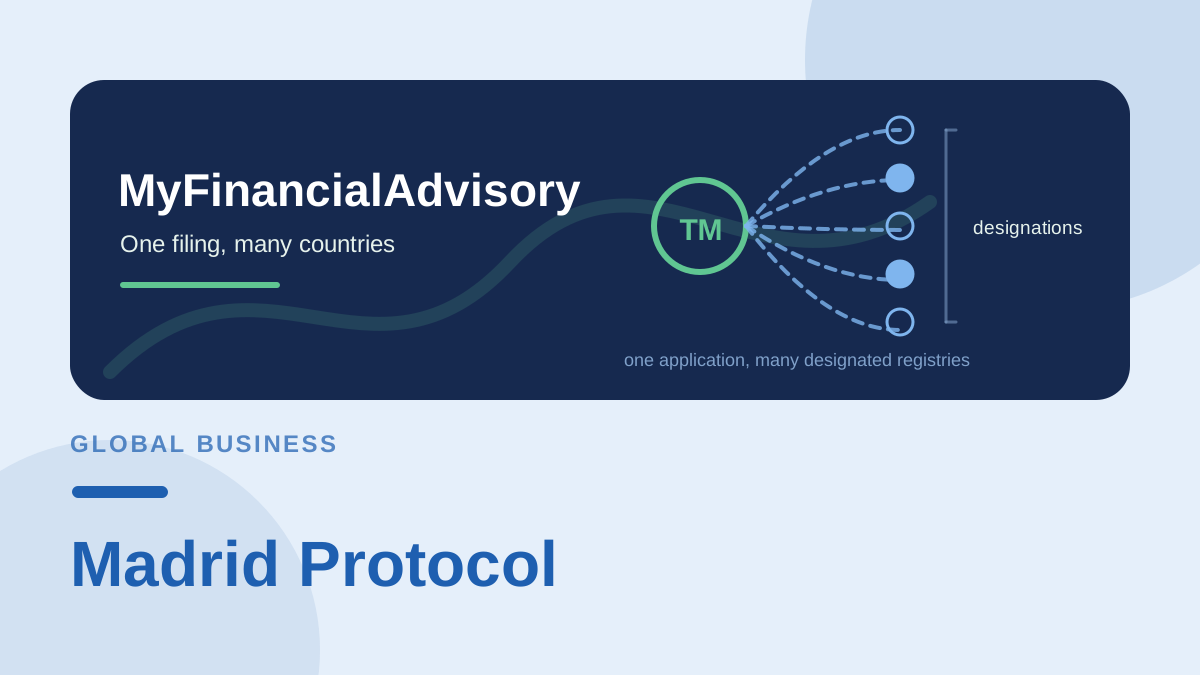
The Madrid Protocol is an international system that lets you seek trademark protection in many member countries from a single application, filed through your home (base) registration. It's filed via the home IP office and administered by WIPO. You still need a base application/registration (e.g. your Indian trademark) first, and each designated country can still examine and refuse — so it's streamlined, not automatic.
Why use the Madrid Protocol
- One application, many countries — instead of separate national filings
- One language, one set of fees (in broad terms) to start
- Centralised management — renewals and changes through one system
- Cost-effective for protecting a brand across multiple markets
How it works
- Base mark — you need a home application/registration (e.g. in India)
- International application — filed through your home office to WIPO, designating the countries you want
- WIPO formal check and recording in the International Register
- National examination — each designated country examines under its own law and can grant or refuse
- Protection — granted country-by-country
The "central attack" caveat
For the first five years, the international registration depends on the base mark. If the base is cancelled in that period, the international registration can fall too ("central attack") — though it can sometimes be transformed into national applications. We factor this into strategy.
Choosing countries and classes
Designate the countries where you actually sell or plan to, in the right classes. Over-designating wastes fees; under-designating leaves gaps.
Common mistakes
- Filing internationally without a solid base mark
- Designating the wrong countries or classes
- Ignoring the five-year dependency risk
- Assuming protection is automatic (each country still examines)
Note
Detailed trademark strategy lives in our Trademark services. We never guarantee registration in any country — each office decides.
File once, protect across your real markets, and your brand travels with you.
Ready to act?
Protect your brand worldwide
We file your international trademark via the Madrid Protocol from your base mark, designating the markets that matter — one application, many countries.
Frequently asked questions
What is the Madrid Protocol?
An international system that lets you seek trademark protection in many member countries from a single application, filed through your home IP office and administered by WIPO.
Do I need an Indian trademark first?
Yes — the Madrid route is based on a home (base) application or registration, such as your Indian trademark. The international application flows from it.
Does the Madrid Protocol guarantee protection everywhere?
No. Each designated country examines the mark under its own law and can grant or refuse it. The Protocol streamlines filing; it doesn't guarantee registration.
What is central attack?
For the first five years, the international registration depends on the base mark. If the base is cancelled in that window, the international registration can fall too — though it may sometimes be transformed into national applications.
Which countries should I designate?
Those where you actually sell or plan to, in the right classes. Over-designating wastes fees; under-designating leaves gaps. We help you choose.
Is it cheaper than filing country-by-country?
Generally, for multiple countries it's more cost-effective and easier to manage than separate national filings, though fees depend on the countries and classes.
How is this different from a US trademark filing?
A US filing protects you in the US specifically (via the USPTO); the Madrid Protocol is a route to file across many countries at once. You can also designate the US through Madrid.
Related MFA services
If you want this handled rather than done yourself, these are the matching services.
Written by
MyFinancialAdvisory Editorial
Editorial guidance prepared for business owners and reviewed before production publication.
Reviewed by MyFinancialAdvisory Global Desk
Written against official sources, with the governing rule named wherever a figure or deadline is given. General guidance — not advice on your specific case.
Ready to act?
Protect your brand worldwide
We file your international trademark via the Madrid Protocol from your base mark, designating the markets that matter — one application, many countries.
Related guides
Global Business
USA Trademark Registration Guide for Indian Brands
Selling to US customers? A US trademark protects your brand with the USPTO. Here's how registration works, what a use-in-commerce filing means, and the common pitfalls.
Read guide
Global Business
Global Expansion Checklist for Indian Startups
Going global is more than incorporating abroad. Here's a practical checklist for Indian startups — entity, banking, tax, IP, contracts and compliance — so nothing is missed.
Read guide
Global Business
UAE vs USA vs Singapore vs UK: Where Should You Incorporate?
Four popular jurisdictions, four very different trade-offs. Here's an honest comparison of the UAE, USA, Singapore and UK to help Indian founders decide where to incorporate.
Read guide