
Private Limited Company vs LLP
Private limited company or LLP? A practical comparison across liability, compliance burden, taxation, raising investment and cost — so you pick the structure that fits your plan.
On this page
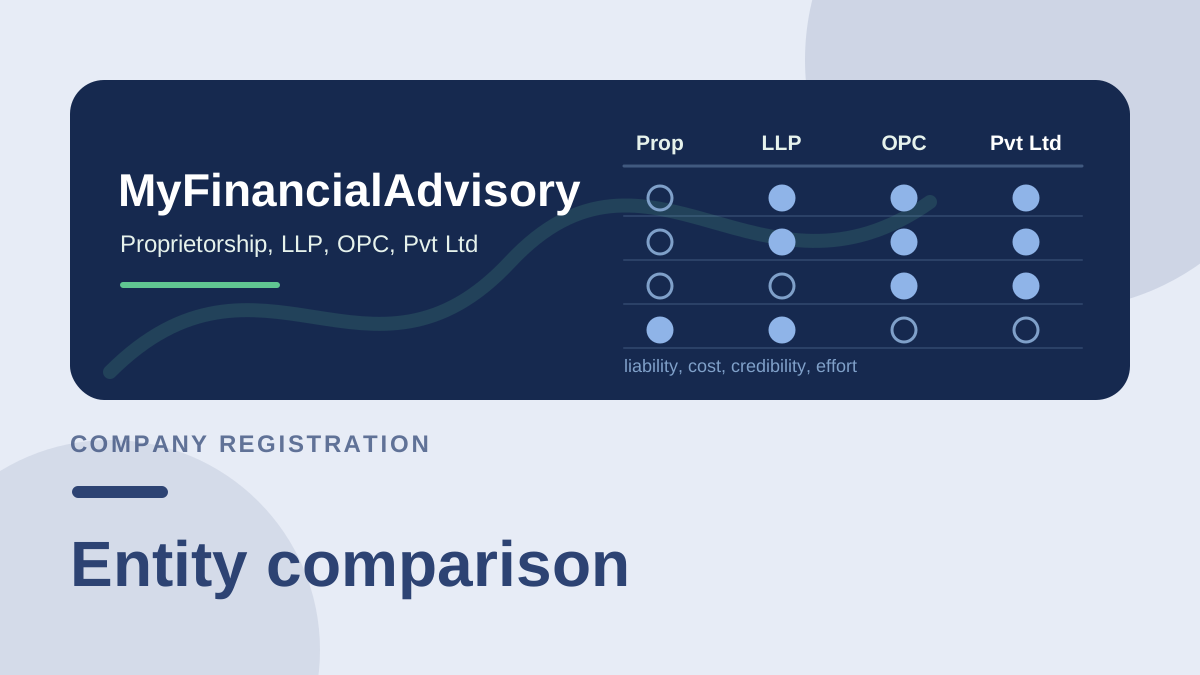
Both a private limited company and an LLP give you limited liability and a separate legal identity, so the real decision is about compliance, tax and where you want the business to go. Here is how they actually differ.
The quick verdict
If you intend to raise external equity or offer employee stock, choose a private limited company. If you are a profitable, closely held services or trading business that wants lower compliance, an LLP often fits better. The rest of this guide is why.
Compliance burden
A private limited company carries more obligations — board meetings, statutory audit regardless of size, and annual filings such as AOC-4 and MGT-7. An LLP has a lighter calendar: Form 11 and Form 8 each year, with audit required only once turnover or contribution crosses prescribed limits. Lower compliance is the LLP's clearest advantage.
How each is taxed
Both are taxed at flat corporate-style rates rather than slabs, but the nuances differ. Companies may access lower concessional tax rates in certain cases but face dividend taxation in the shareholders' hands when profits are distributed. An LLP pays tax on its profits and partners can draw remuneration and interest within limits, with no separate dividend-style tax on the share of profit. The better answer depends on how you intend to take money out.
Raising investment
This is often the deciding factor. Venture capital, angel investors and structured ESOPs are built around shares, board seats and a company's cap table. LLPs cannot issue shares, which makes priced equity rounds impractical. If outside investment is on your roadmap, the company structure is hard to avoid.
Which one should you choose
Map it to your next two years. Bootstrapped services firm keeping things lean — LLP. Product startup that will raise capital and hire on stock — private limited company. Converting later is possible but adds cost and disruption, so it is worth choosing deliberately now.
There is no universally better structure — only the one that fits your funding and compliance appetite. Tax rates and thresholds change, so confirm the current position for your numbers before deciding.
Ready to act?
Ready to register your company?
We handle name approval, DSC/DIN, SPICe+ filing and PAN/TAN — government fees shown separately, expert-reviewed.
Frequently asked questions
Is an LLP cheaper to maintain than a private limited company?
Generally yes. An LLP has fewer mandatory filings and no statutory audit until turnover or contribution crosses prescribed limits, so annual compliance cost is usually lower.
Can an LLP raise venture capital?
Not easily. LLPs cannot issue shares, so priced equity rounds and ESOPs are impractical. Startups planning to raise capital usually choose a private limited company.
Which is better for a startup?
A private limited company suits startups that will raise external equity or grant stock options. An LLP suits closely held, profitable services or trading businesses wanting lighter compliance.
Can I convert an LLP to a company later?
Yes, conversion is possible, but it adds cost and administrative disruption, so it is better to choose the right structure at the outset where you can.
Related MFA services
If you want this handled rather than done yourself, these are the matching services.
Written by
MyFinancialAdvisory Editorial
Editorial guidance prepared for business owners and reviewed before production publication.
Reviewed by MyFinancialAdvisory Compliance Team
Written against official sources, with the governing rule named wherever a figure or deadline is given. General guidance — not advice on your specific case.
Ready to act?
Ready to register your company?
We handle name approval, DSC/DIN, SPICe+ filing and PAN/TAN — government fees shown separately, expert-reviewed.
Related guides
Company Registration
Section 8 Company Registration: Licence, Conditions and Exit
A Section 8 company is a licence, not just a company — and the licence carries conditions that outlast incorporation. What section 8 actually requires, why INC-12 is probably not your form, and the exit restrictions to understand before you choose the structure.
Read guide
Company Registration
Setting Up an Indian Subsidiary of a Foreign Company
Incorporation is the easy part. The resident-director test, the apostille requirements that send SPICe+ back, and the FEMA reporting clocks that start the day shares are issued are what actually decide whether the entity is clean — with the late fee that applies when they are missed.
Read guide
Company Registration
Why MCA Rejects Company Names — and How to Fix It
A rejected name is the most common way an incorporation loses two weeks. These are the grounds MCA itself publishes, what each one actually means, how many resubmissions you get, and the withdrawal step people miss when re-applying.
Read guide