
Trademark Class Finder Guide
Trademark classes decide what your registration actually protects. Here is how the 45-class NICE system works, how to find your class, when you need more than one, and why the wrong class is costly.
On this page
When you register a trademark you do not protect the name everywhere — you protect it for specific goods and services. Those are defined by class, and choosing correctly is what makes the difference between real protection and a registration with gaps.
What trademark classes are
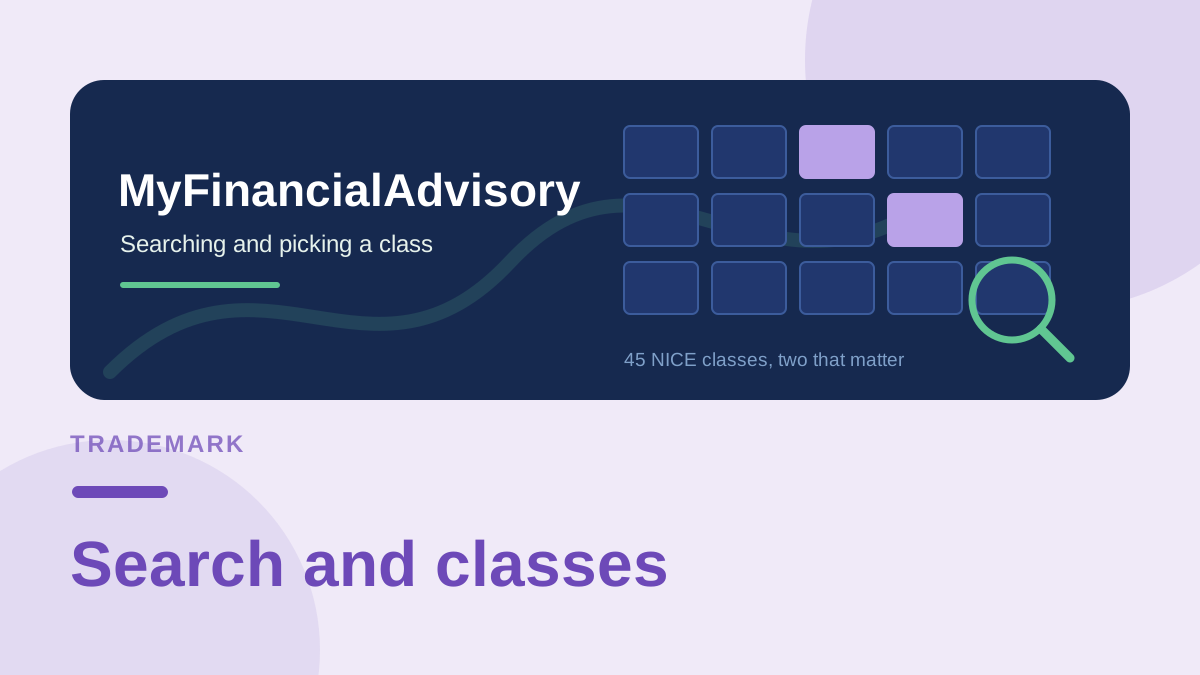
The world uses the NICE classification, a system of 45 classes. Classes 1 to 34 cover goods and classes 35 to 45 cover services. Your registration applies only within the classes you file in, so the class list is effectively the boundary of your brand protection.
Goods versus services
This trips up many applicants. If you make or sell a physical product, you are in the goods classes. If you provide a service — consulting, software as a service, retail, education — you are in the services classes. A business that does both may need a class from each side.
How to find your class
Describe precisely what you sell, then match it to the class whose description fits. For example, clothing sits in class 25, software in class 9, and business and advertising services in class 35. Where an offering could plausibly fall in more than one class, the safer reading of your actual activity decides it.
When you need more than one class
A brand that spans several lines of business often needs a multi-class application. A company selling cosmetics (class 3) that also runs salons (class 44) needs both to be protected in each. Filing across the classes you genuinely operate in prevents a competitor from registering your name in a class you left open.
Why the wrong class is costly
File in the wrong class and you may have a registration that does not stop the infringement you care about, and correcting it can mean filing afresh and losing your priority date. Because class defines scope, it is worth getting right before you file, not after.
Your class list is your protection map — draw it around what you actually sell, today and in the near future. The NICE classification is periodically revised, so confirm the current class for your goods or services.
Ready to act?
Not sure which class to file in?
We map your goods and services to the right NICE class so your trademark actually protects what matters.
Frequently asked questions
How many trademark classes are there?
There are 45 classes under the NICE classification — classes 1 to 34 for goods and 35 to 45 for services.
Can one trademark cover multiple classes?
Yes. A multi-class application lets you protect the same mark across several classes, which suits brands that operate in more than one line of business.
What class is software in?
Software is commonly registered in class 9, though associated services such as software as a service may also involve class 42. The right class depends on exactly what you offer.
What happens if I choose the wrong class?
Your registration may not protect the goods or services you actually sell, and fixing it can require a fresh application, so class choice is best confirmed before filing.
Related MFA services
If you want this handled rather than done yourself, these are the matching services.
Written by
MyFinancialAdvisory Editorial
Editorial guidance prepared for business owners and reviewed before production publication.
Reviewed by MyFinancialAdvisory Trademark Team
Written against official sources, with the governing rule named wherever a figure or deadline is given. General guidance — not advice on your specific case.
Ready to act?
Not sure which class to file in?
We map your goods and services to the right NICE class so your trademark actually protects what matters.
Related guides
Trademark
Someone Is Using Your Brand: What Infringement Actually Means, and What to Send
The Trade Marks Act nowhere requires a cease and desist notice before suing — and it makes an unjustified one independently actionable. So the notice has to earn its place. Here is what Section 29 actually catches, the defences in Sections 30, 34 and 35, and the one provision that gives a well-drafted notice real legal work to do.
Read guideTrademark
Trademark Classes and Multi-Class Filing: What the Fee Actually Buys
The government fee is charged for each class and for each mark, so classification is the single biggest lever on what a trademark costs. Here is what the Act and the Rules actually say about classes, why a class number does not decide similarity, why goods cannot be added after filing, and how a multi-class application is divided when one class runs into trouble.
Read guide
Trademark
Abandoned Trademark Application: Every Deadline That Kills It, and What Is Left
Six different deadlines can end a trademark application, and they are not the same kind of deadline. Some say the Registrar "may" treat it as abandoned; two say it "shall be" or is "deemed" abandoned automatically. That difference decides whether anything can be recovered — and this is the map of which is which.
Read guide