
UAE Company Registration Guide for Indian Founders
The UAE is one of the most popular global bases for Indian founders. Here's how free zone, mainland and offshore differ, what the new corporate tax means, and how to choose.
On this page
The UAE pulls in Indian founders with 0% personal tax, proximity and residency visas — but the structure you pick quietly decides your cost, tax and flexibility. Here's the guide.
Quick answer
Registering in the UAE means choosing among free zone (100% foreign ownership, sector-focused, most popular), mainland (DED licence, can trade in the UAE market, 100% ownership for many activities now) and offshore (holding/international, no UAE trading). There's no personal income tax, but a 9% corporate tax now applies above a threshold, with possible 0% for qualifying free-zone income — so choose on substance, not headline rates.
Free zone vs mainland vs offshore
- Free zone — 100% ownership, quick setup, residency visas, but generally can't sell directly into the UAE mainland without a distributor. Great for services, SaaS, consulting, trading and holding.
- Mainland — licensed by the emirate's DED, can trade across the UAE and bid for government work; 100% foreign ownership now allowed for many activities.
- Offshore — for holding and international business; no UAE office or local trading.
Choosing a free zone
There are many (IFZA, DMCC, RAKEZ, Meydan, DAFZA and more), each with different activity lists, visa quotas, office options and costs. The right one depends on your activity and visa needs — not just the cheapest package.
The tax picture (don't oversimplify)
- 0% personal income tax
- 9% corporate tax on profits above the threshold (since 2023)
- 0% possible on qualifying free-zone income, subject to conditions and substance
- 5% VAT
Your own tax residency (e.g. in India) still matters. We coordinate specialists rather than give a standalone opinion.
Documents and process
- Passports, photos, address proof, sometimes a CV/bank reference
- Proposed names, activity, shareholding
- Name approval, licence, establishment card and visa, then banking
FEMA / ODI for Indian founders
Investing into a UAE company from India must follow FEMA's Overseas Direct Investment / LRS rules. We flag this upfront and coordinate specialists.
Common mistakes
- Choosing a free zone on price, not activity fit
- Assuming 0% tax and ignoring the new corporate tax/substance
- Underestimating bank-account KYC and timelines
- Ignoring FEMA/ODI compliance
Pick the structure on substance and your real activity, and the UAE can be an excellent global base.
Ready to act?
Set up in the UAE, the right way
We match your activity to the right free zone or mainland licence, prepare your documents and coordinate licensed agents through licence, visa and banking.
Frequently asked questions
What are the UAE company structures?
Free zone (100% ownership, sector-focused, most popular), mainland (DED licence, can trade in the UAE market), and offshore (holding/international, no UAE trading). The right one depends on your activity.
Does the UAE have corporate tax now?
Yes — a 9% corporate tax applies on profits above a threshold (since 2023), with possible 0% for qualifying free-zone income subject to conditions, plus 5% VAT. There's no personal income tax.
Which free zone is best?
It depends on your activity, visa needs, office requirements and budget. Zones like IFZA, DMCC, RAKEZ and Meydan suit different cases — we compare suitable ones rather than push one.
Can I set up remotely?
Many UAE setups can be done remotely with KYC, though some bank or visa stages may need a visit. We tell you what your case needs.
Can you guarantee a UAE bank account or visa?
No. Banking and visas involve the authority's or bank's own process and are never guaranteed. We prepare you well and coordinate, but the decision rests with them.
What about FEMA/ODI for investing from India?
An Indian resident investing in a UAE company must comply with FEMA's ODI/LRS rules. We flag these and coordinate specialists rather than advise standalone.
What ongoing compliance applies?
Annual licence renewal, corporate tax and VAT where applicable, accounting/audit in some zones, and economic-substance considerations.
Related MFA services
If you want this handled rather than done yourself, these are the matching services.
Written by
MyFinancialAdvisory Editorial
Editorial guidance prepared for business owners and reviewed before production publication.
Reviewed by MyFinancialAdvisory Global Desk
Written against official sources, with the governing rule named wherever a figure or deadline is given. General guidance — not advice on your specific case.
Ready to act?
Set up in the UAE, the right way
We match your activity to the right free zone or mainland licence, prepare your documents and coordinate licensed agents through licence, visa and banking.
Related guides
Global Business
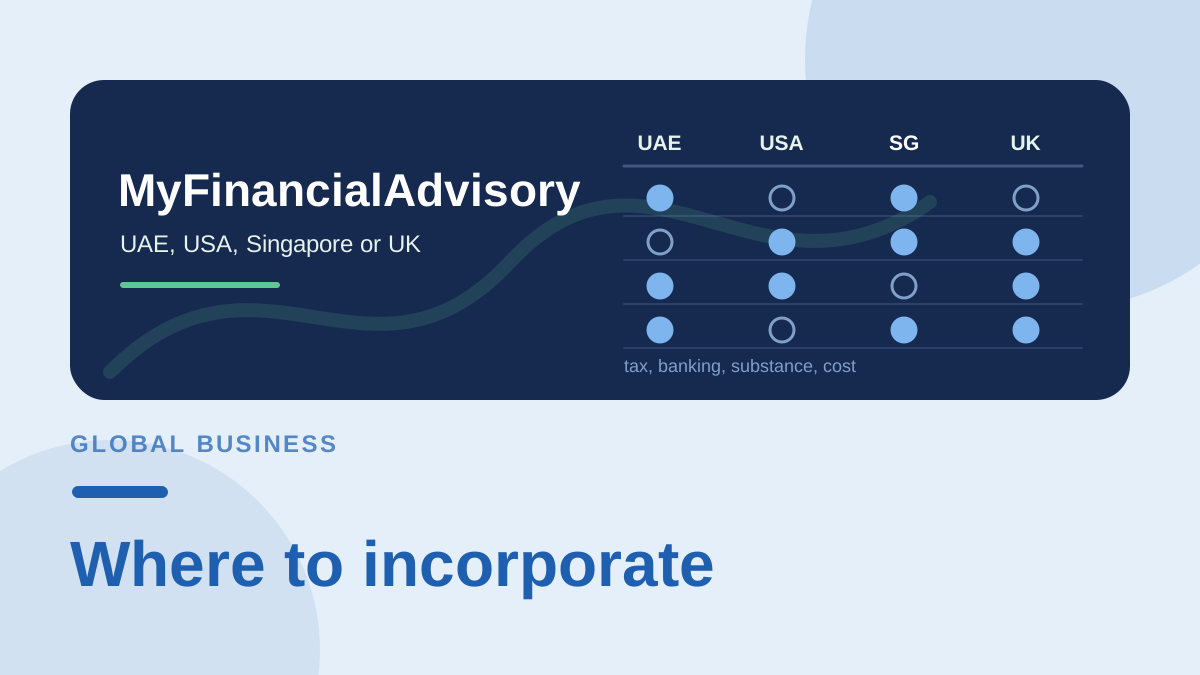
UAE vs USA vs Singapore vs UK: Where Should You Incorporate?
Four popular jurisdictions, four very different trade-offs. Here's an honest comparison of the UAE, USA, Singapore and UK to help Indian founders decide where to incorporate.
Read guide
Global Business
Documents Required for International Company Registration
Incorporating abroad stalls most often on documents. Here's the common KYC set and the jurisdiction-specific extras for the UAE, USA, Singapore and UK.
Read guide
Global Business
Foreign Company Compliance Basics for Indian Founders
Incorporating abroad is the easy part — keeping the entity compliant is the ongoing one. Here's what annual compliance looks like across the UAE, USA, Singapore and UK.
Read guide