
FSSAI Registration Guide
Starting a food business? You need an FSSAI registration or licence first. Here is the process, the documents, the timeline and the tier that applies to you.
On this page
Whether you run a home kitchen, a cloud kitchen or a food factory, the law wants you to have an FSSAI authorisation before you sell. Here is the process, start to finish.
Quick answer
The FSSAI registration process runs on the FoSCoS portal: pick the right tier (Basic Registration, State Licence or Central Licence), submit the application with your documents and the per-year government fee, respond to any query or inspection, and receive your 14-digit FSSAI number. Basic Registration is often issued in days; licences take longer.
Step 1 — Identify your tier
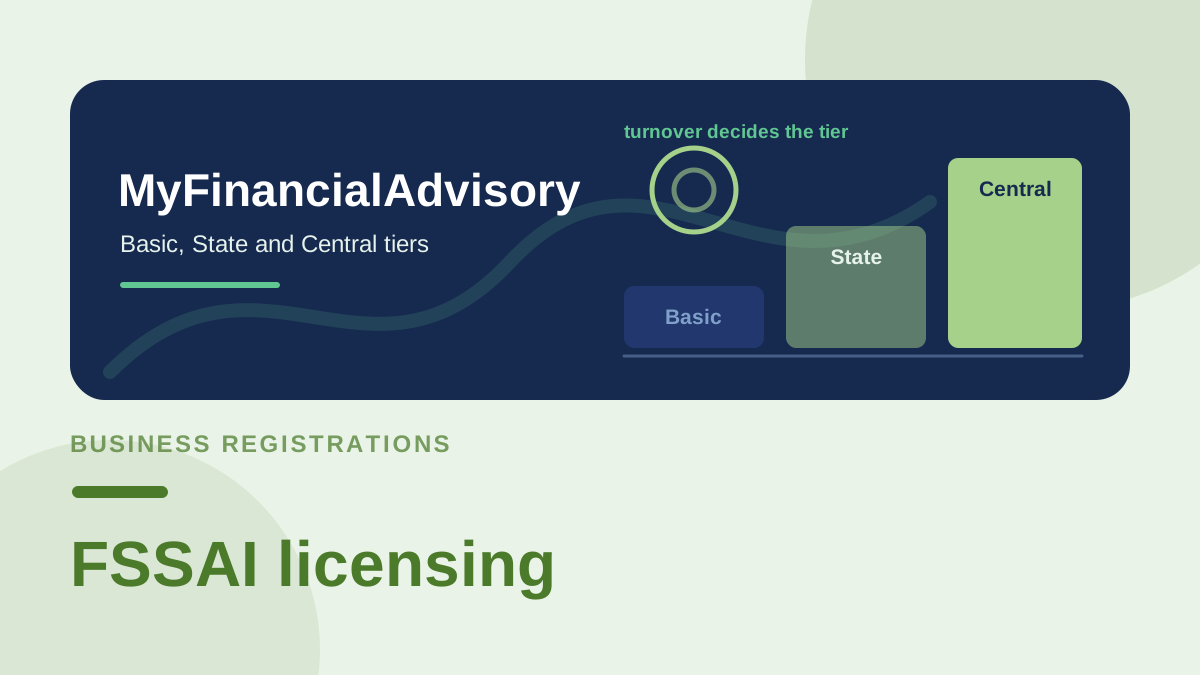
- Basic Registration: smallest FBOs below the turnover limit (home sellers, small stalls, small retailers)
- State Licence: mid-sized manufacturers, restaurants, caterers, distributors
- Central Licence: large operators, and importers/exporters of food regardless of turnover
Getting the tier right is the single most important step.
Step 2 — Gather documents
For Basic Registration: photo ID of the operator, a passport photo, premises/address proof, and a rent agreement or NOC if rented. Licences need more — Form B, a premises layout, a food-safety management plan, a machinery list, and category-specific items like a water test report or NOCs.
Step 3 — File on FoSCoS
The application, documents and government fee (for your chosen 1-5 year period) are submitted on the Food Safety Compliance System (FoSCoS) portal. You also pick your food product categories.
Step 4 — Review, query, inspection
The food authority reviews. Basic Registration usually has no inspection; State and Central licences often involve a physical inspection of the premises. We respond to any clarification.
Step 5 — Get your FSSAI number
On approval, your 14-digit FSSAI number and certificate are issued. By law it must be displayed at your premises and printed on packaging and bills.
Timeline
Basic Registration is commonly issued within about a week to a month; licences can take longer, especially with inspection. Timelines rest with the authority — no one can guarantee an exact date.
After registration
- Display and print your FSSAI number
- Renew before expiry (the authorisation is for 1-5 years)
- File the annual return (Form D1) if you are a manufacturer/importer
- Upgrade if you cross your tier's limit
Common mistakes
- Applying for Basic when a licence is required (or vice versa)
- Wrong food-category selection
- Weak premises/address proof
- Operating on a lapsed FSSAI
Get the tier and documents right, and your food business is compliant and ready to sell — including on online marketplaces.
Ready to act?
Get your food business FSSAI-ready
We confirm the right tier, file your application on FoSCoS and get you your 14-digit FSSAI number — so you can operate and sell online legally.
Frequently asked questions
What is the FSSAI registration process?
Identify your tier (Basic/State/Central), submit the application with documents and the government fee on the FoSCoS portal, respond to any query or inspection, and receive your 14-digit FSSAI number.
Which FSSAI tier do I need?
Basic Registration for the smallest FBOs, a State Licence for mid-sized operators, and a Central Licence for large operators and food importers/exporters. It depends on turnover and activity.
What documents are required?
For Basic Registration: operator photo ID, a photo, premises/address proof and a rent agreement or NOC if rented. Licences need more, including a food-safety plan, layout and machinery list.
How long does FSSAI registration take?
Basic Registration is commonly issued within about a week to a month; licences take longer, especially with inspection. Timelines rest with the authority.
Is the FSSAI number mandatory to display?
Yes — the 14-digit number must be displayed at your premises and printed on food packaging and bills.
Can I sell on Swiggy, Zomato or Amazon without FSSAI?
No. Online food platforms require a valid FSSAI number to list and sell. Basic Registration is often enough to start small.
What happens after registration?
Display and print your number, renew before expiry (1-5 year validity), file the annual return if you are a manufacturer/importer, and upgrade tiers if you grow.
Related MFA services
If you want this handled rather than done yourself, these are the matching services.
Written by
MyFinancialAdvisory Editorial
Editorial guidance prepared for business owners and reviewed before production publication.
Reviewed by MyFinancialAdvisory Compliance Team
Written against official sources, with the governing rule named wherever a figure or deadline is given. General guidance — not advice on your specific case.
Ready to act?
Get your food business FSSAI-ready
We confirm the right tier, file your application on FoSCoS and get you your 14-digit FSSAI number — so you can operate and sell online legally.
Related guides
Business Registrations
FSSAI License Types: Basic Registration, State & Central Explained
Basic Registration, State Licence or Central Licence? Which FSSAI category applies depends on your turnover and activity. Here is how to tell, and what each one needs.
Read guide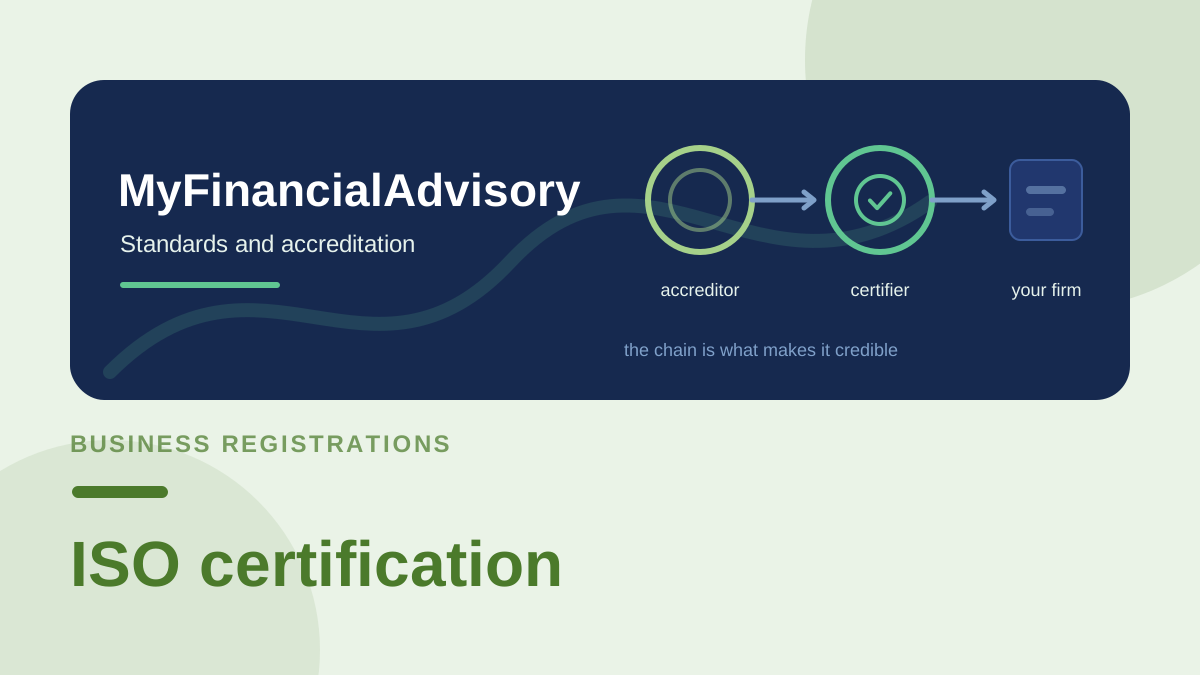
Business Registrations
ISO Certification Guide: Standards, Process & Accreditation
ISO certification can boost credibility and win tenders — but only if it is real. Here is how to pick the right standard, what the process looks like, and why accreditation is the detail that matters.
Read guide
Business Registrations
Shop Act Registration Guide: Shops & Establishment, State by State
Almost every shop and office needs Shops & Establishment registration soon after starting — but the rules are state-specific. Here is what it is, why banks ask for it, and how to register.
Read guide