
Import Export Code Registration Guide
Want to import or export from India? You need an IEC first. Here is what the Import Export Code is, how to get it, the annual update people forget, and what else you need to actually ship.
On this page
The Import Export Code is the very first thing any cross-border business needs. Here is how to get it and what comes next.
Quick answer
The IEC (Import Export Code) is a unique business ID from the DGFT required to import or export from India. It is now linked to your PAN, applied for on the DGFT portal with your bank and address details, and usually issued within a few working days. There is one annual confirmation people forget — more on that below.
Why you need it
Without an IEC:
- Customs will not clear your shipments
- Banks will not process your import/export remittances
- You cannot avail most trade benefits and schemes
It is a one-time registration with no return filing — but it must be confirmed annually.
Documents required
- PAN of the individual/business
- Bank account details with a cancelled cheque or banker's certificate
- Address proof of the place of business
- Aadhaar/DSC of the signatory
- Constitution proof for companies/LLPs/firms
The most common cause of rejection is a mismatch between your PAN, bank and address details — so these must line up.
The process
- Validate your PAN, bank and address details
- File the IEC application on the DGFT portal with the fee
- The DGFT issues your IEC (linked to PAN), usually within a few working days
The annual update people forget
Even though there is no return, the IEC must be confirmed/updated on the DGFT portal every year (typically in the April-June window), even if nothing has changed. Skip it and your IEC can be deactivated — a nasty surprise mid-shipment.
What else you need to trade
- AD code registration with your bank at the port (for exports)
- RCMC from the relevant Export Promotion Council (to claim scheme benefits)
- ICEGATE registration (to file customs documents and pay duties)
- For food: FSSAI Central Licence and often APEDA
Common mistakes
- Bank/PAN/address details not matching
- Assuming the IEC needs no annual confirmation
- Not pairing the IEC with AD code/RCMC for exports
- Wrong constitution documents
Get the IEC right, keep it confirmed annually, and add the AD code, RCMC and ICEGATE — and you are ready to trade.
Ready to act?
Ready to trade across borders?
We file your IEC with the DGFT, validate every detail to avoid rejection, and get you export/import-ready.
Frequently asked questions
What is an Import Export Code (IEC)?
A unique business ID from the DGFT required to import or export from India. It is now linked to your PAN, so the PAN effectively serves as the IEC.
Who needs an IEC?
Anyone importing goods into, or exporting goods or services from, India — including e-commerce sellers shipping abroad and anyone receiving foreign trade payments.
What documents are needed for an IEC?
PAN, a business bank account with a cancelled cheque or banker's certificate, address proof, the signatory's Aadhaar/DSC, and constitution proof for companies/LLPs/firms.
Does the IEC need annual filing?
There is no return, but the IEC must be confirmed/updated on the DGFT portal each year (typically April-June), even with no changes, or it can be deactivated.
How long does it take to get an IEC?
Commonly a few working days once details validate cleanly. Issuance rests with the DGFT, so no exact time is guaranteed.
What else do I need to start exporting?
Usually AD-code registration at the port, an RCMC from the relevant council for scheme benefits, and ICEGATE access. Food exporters also need FSSAI Central and often APEDA.
Why was my IEC application rejected?
Most often because the PAN, bank and address details did not match. We validate these before filing to avoid rejection.
Related MFA services
If you want this handled rather than done yourself, these are the matching services.
Written by
MyFinancialAdvisory Editorial
Editorial guidance prepared for business owners and reviewed before production publication.
Reviewed by MyFinancialAdvisory Compliance Team
Written against official sources, with the governing rule named wherever a figure or deadline is given. General guidance — not advice on your specific case.
Ready to act?
Ready to trade across borders?
We file your IEC with the DGFT, validate every detail to avoid rejection, and get you export/import-ready.
Related guides
Business Registrations
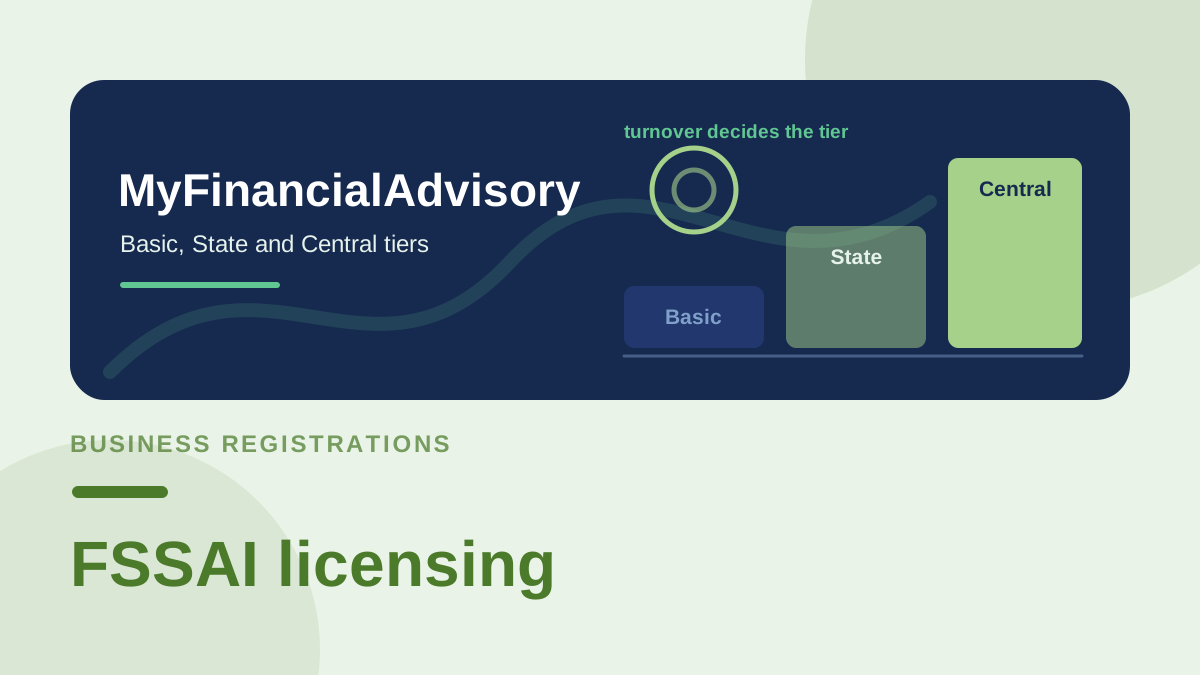
FSSAI License Types: Basic Registration, State & Central Explained
Basic Registration, State Licence or Central Licence? Which FSSAI category applies depends on your turnover and activity. Here is how to tell, and what each one needs.
Read guide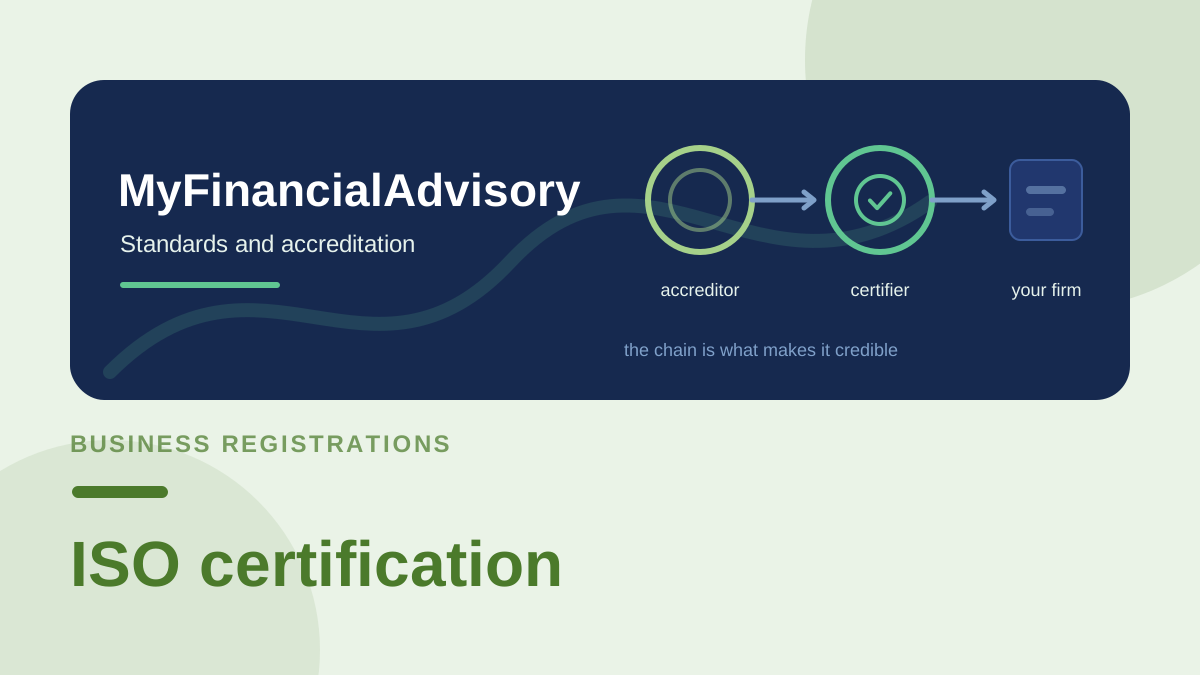
Business Registrations
ISO Certification Guide: Standards, Process & Accreditation
ISO certification can boost credibility and win tenders — but only if it is real. Here is how to pick the right standard, what the process looks like, and why accreditation is the detail that matters.
Read guide
Business Registrations
Udyam Registration Benefits
Udyam (MSME) registration is free of government fee and quick — and the benefits are real. Here is what MSME recognition actually gets you, from cheaper credit to delayed-payment protection.
Read guide