
OPC Registration Process in India: A Solo Founder's Guide
A One Person Company lets a single founder run a company with limited liability. Here is the full OPC registration process, the nominee requirement, and how it differs from a proprietorship.
On this page
If you're a solo founder who wants the credibility and protection of a company — without a co-founder — a One Person Company (OPC) is built for you.
Quick answer
OPC registration runs through SPICe+, the same form as a private limited company, and takes about 10–15 working days. You need one member (you), one nominee, a registered office, and the usual KYC. The process gives you a CIN, PAN, TAN, DIN and MOA/AOA.
Step-by-step process
- DSC & DIN — digital signature and Director Identification Number.
- Name approval — via SPICe+ Part A.
- Drafting & nominee — MOA/AOA drafted; the nominee's consent is recorded in Form INC-3.
- Incorporation (SPICe+) — Part B and linked forms filed.
- Certificate & PAN/TAN — the MCA issues the COI; PAN, TAN and DIN are allotted.
The nominee: a unique OPC requirement
Every OPC needs a nominee — a person who takes over if the sole member can no longer continue. This ensures business continuity and is mandatory at incorporation.
OPC vs proprietorship
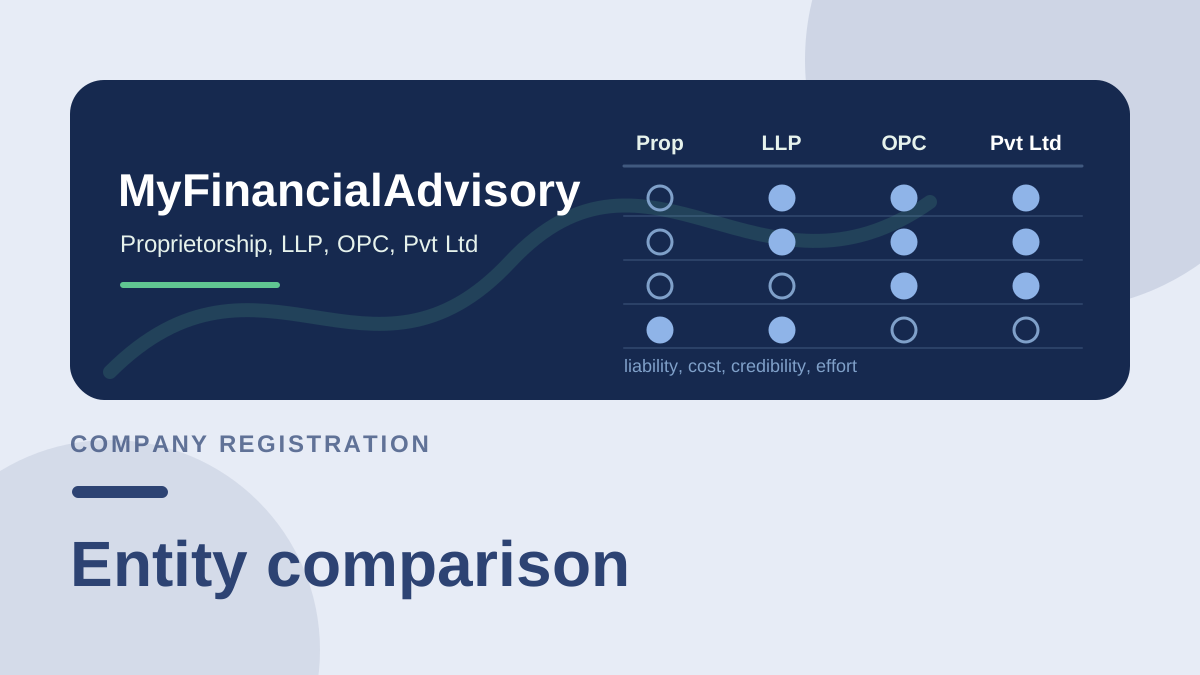
Unlike a sole proprietorship — where you and the business are legally the same, with unlimited liability — an OPC is a separate legal entity with limited liability and a CIN. That credibility helps with banks, clients and vendors.
Compliance after registration
INC-20A within 180 days, auditor (ADT-1) within 30 days, annual filings (AOC-4 and MGT-7A), and director KYC. It's lighter than a Pvt Ltd but not zero.
Common mistakes
- Forgetting the nominee consent (INC-3)
- Missing INC-20A within 180 days
- Choosing an OPC when there's actually a co-founder
- Assuming an OPC has no annual compliance
An OPC gives a solo founder a real company. Just remember the nominee and the early deadlines.
Ready to act?
Go solo, but as a company
We incorporate your One Person Company end to end — limited liability, a separate identity and a clear compliance calendar.
Frequently asked questions
How do I register a One Person Company?
Through SPICe+ on the MCA portal: obtain DSC and DIN, reserve the name, draft MOA/AOA, record the nominee in INC-3, file SPICe+, and receive the COI, CIN, PAN, TAN and DIN.
Who can register an OPC?
A single natural person resident in India, who must also nominate another resident individual as nominee. A person can incorporate only one OPC at a time.
What is the nominee for?
The nominee takes over the OPC if the sole member dies or becomes incapacitated, ensuring continuity. Their consent is recorded in Form INC-3.
How long does OPC registration take?
Typically 10–15 working days for a clean SPICe+ application.
How is an OPC different from a proprietorship?
A proprietorship has unlimited liability and isn't separate from the owner. An OPC is a separate legal entity with limited liability and corporate credibility.
Does an OPC have to convert to a Pvt Ltd?
Earlier mandatory conversion thresholds were relaxed. An OPC can continue, or convert voluntarily when it makes sense — for example, to raise funding.
Related MFA services
If you want this handled rather than done yourself, these are the matching services.
Written by
MyFinancialAdvisory Editorial
Editorial guidance prepared for business owners and reviewed before production publication.
Reviewed by MyFinancialAdvisory Compliance Team
Written against official sources, with the governing rule named wherever a figure or deadline is given. General guidance — not advice on your specific case.
Ready to act?
Go solo, but as a company
We incorporate your One Person Company end to end — limited liability, a separate identity and a clear compliance calendar.
Related guides
Company Registration
Proprietorship vs Private Limited Company: Which Should You Choose?
Start simple as a proprietor, or incorporate a Private Limited Company? The right choice depends on liability, funding and growth plans. Here is a clear, honest comparison.
Read guide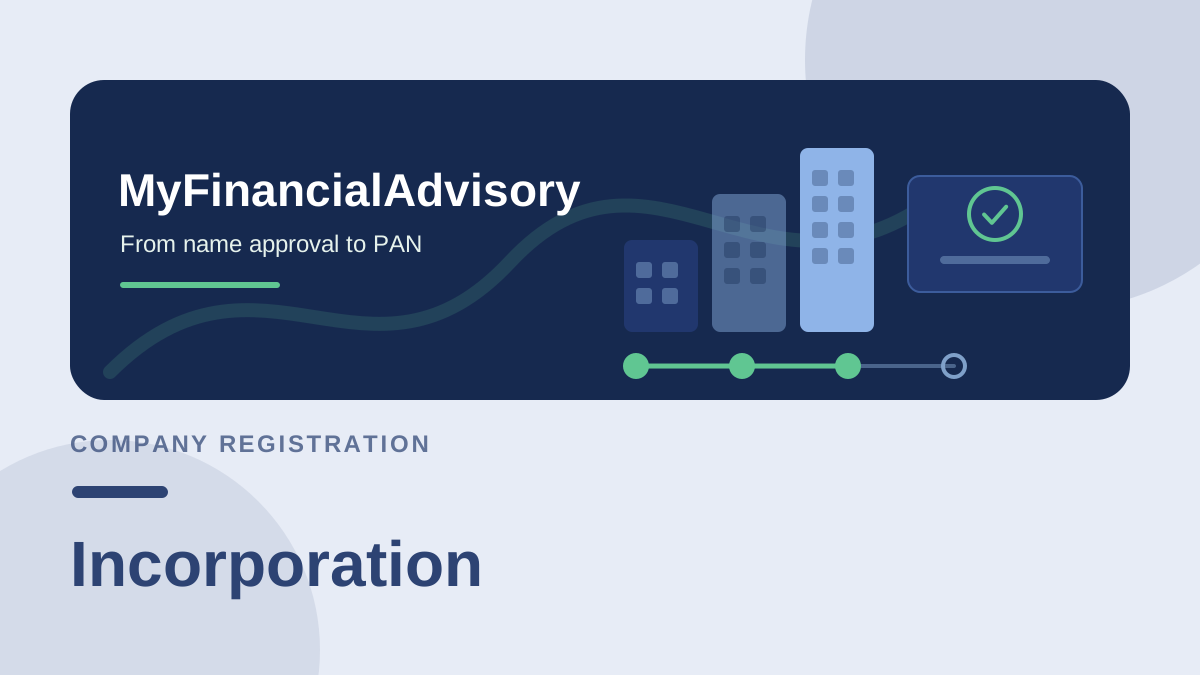
Company Registration
Private Limited Company Registration Process in India
The full SPICe+ route, form by form — name reservation, Part B, eMoA/eAoA, AGILE-PRO-S, the government fees that actually apply, why applications get sent back, and every post-incorporation deadline with the section behind it.
Read guideCompany Registration
LLP Registration Process in India: A Step-by-Step Guide
FiLLiP, DPIN, name reservation and the LLP agreement — with the government fee at every step, the 120-day residence test people confuse with the company rule, and what actually sends a FiLLiP back.
Read guide