
Startup Compliance Checklist India
The first-year compliance checklist every Indian startup needs after incorporation — immediate filings, the registrations to assess, periodic obligations, annual filings and what slipping actually costs.
On this page
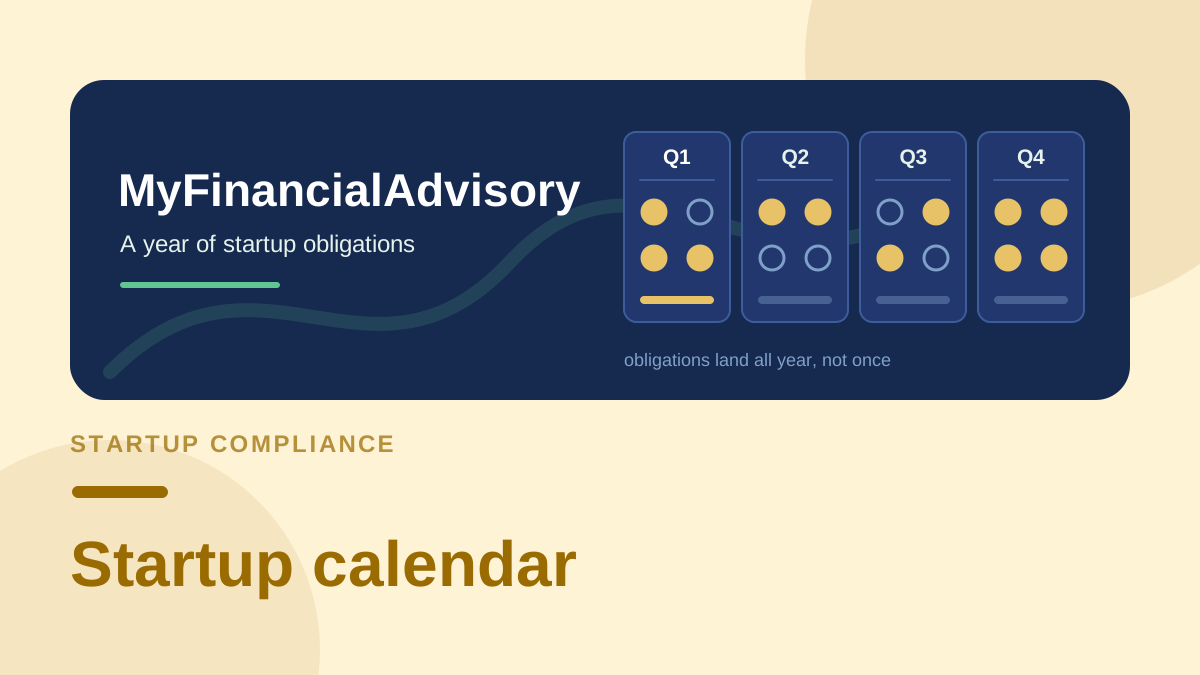
The riskiest period for compliance is the first year, when founders are busy building and the obligations are easy to miss. Incorporation creates a separate legal entity with its own calendar from day one. Here is what that calendar looks like.
Immediately after incorporation
Three things matter early. File INC-20A to declare commencement of business before you start operations or borrow. Appoint a statutory auditor within the first month of incorporation and file ADT-1. Open the company bank account and bring in the subscription money the shareholders committed to.
Registrations to assess
Not every registration applies, but you must check each:
- GST, if you cross the threshold or supply inter-state or through e-commerce.
- Professional tax and Shops and Establishment registration, which are state-specific.
- EPFO and ESIC once you cross the employee headcount triggers.
- Startup India and DPIIT recognition, if you want the associated benefits.
Ongoing periodic compliance
Through the year, keep statutory registers and minutes updated, hold the required board meetings, and file GST and TDS returns on their due dates if those apply to you. Deduct and deposit TDS on salaries and key payments, and file the quarterly TDS returns.
Annual filings
After the financial year ends, the company holds its annual general meeting, files AOC-4 with its financial statements and MGT-7 with its annual return, and files its income tax return. Directors with a DIN file DIR-3 KYC by the annual deadline.
What slipping actually costs
Late ROC forms attract an additional fee of ₹100 per day per form, with no upper cap. A missed DIR-3 KYC deactivates the director's DIN and costs a reactivation fee. Beyond the rupees, a clean compliance record matters in due diligence when you raise money or sell.
Build the calendar once, with reminders, and first-year compliance becomes routine. Thresholds, forms and fees change, so confirm what currently applies to your company.
Ready to act?
Stay compliant from day one
We set up your post-incorporation filings, registrations and a tracked compliance calendar — so first-year deadlines are met, not missed.
Frequently asked questions
What is the first compliance step after incorporation?
Filing INC-20A to declare commencement of business, appointing a statutory auditor within the first month, and bringing in the subscription capital through the company bank account.
When must a startup appoint an auditor?
A statutory auditor must generally be appointed within 30 days of incorporation, with the appointment intimated to the Registrar in form ADT-1.
Which registrations does a new startup need?
It depends on the business — GST if thresholds or inter-state supply apply, professional tax and Shops and Establishment by state, and EPFO and ESIC once employee triggers are crossed.
What happens if a startup misses ROC filings?
Late ROC forms carry an additional fee of ₹100 per day per form with no cap, and a missed DIR-3 KYC deactivates the director's DIN until a reactivation fee is paid.
Written by
MyFinancialAdvisory Editorial
Editorial guidance prepared for business owners and reviewed before production publication.
Reviewed by MyFinancialAdvisory Compliance Team
Written against official sources, with the governing rule named wherever a figure or deadline is given. General guidance — not advice on your specific case.
Ready to act?
Stay compliant from day one
We set up your post-incorporation filings, registrations and a tracked compliance calendar — so first-year deadlines are met, not missed.
Related guides
Startup Compliance
DPIIT Recognition: Benefits and Process Explained
DPIIT recognition is the certificate that turns your company into an officially recognised startup — unlocking tax holidays, angel-tax exemption and IPR benefits. Here is what it gives you and how to get it.
Read guideStartup Compliance
Startup India Registration Guide: Eligibility, Process & Benefits
Startup India recognition unlocks tax holidays, angel-tax exemption, IPR rebates and easier procurement. Here is who qualifies, how to apply, and how to actually claim the benefits.
Read guide
Accounting & Payroll
What Counts as "Wages" for PF, ESI and Gratuity — and the 50% Rule
The contribution rates did not change when the Labour Codes commenced. The base they apply to did. Section 2(y) of the Code on Wages pulls excluded allowances back into wages once they exceed half of total remuneration — and ESIC runs a completely different wage test on top of that. Here is both, with the arithmetic worked out.
Read guide