
Resources
Business compliance guides
Plain-language explainers built for clear next steps — current requirements checked and reviewed by qualified professionals before we publish.
Accounting & Payroll
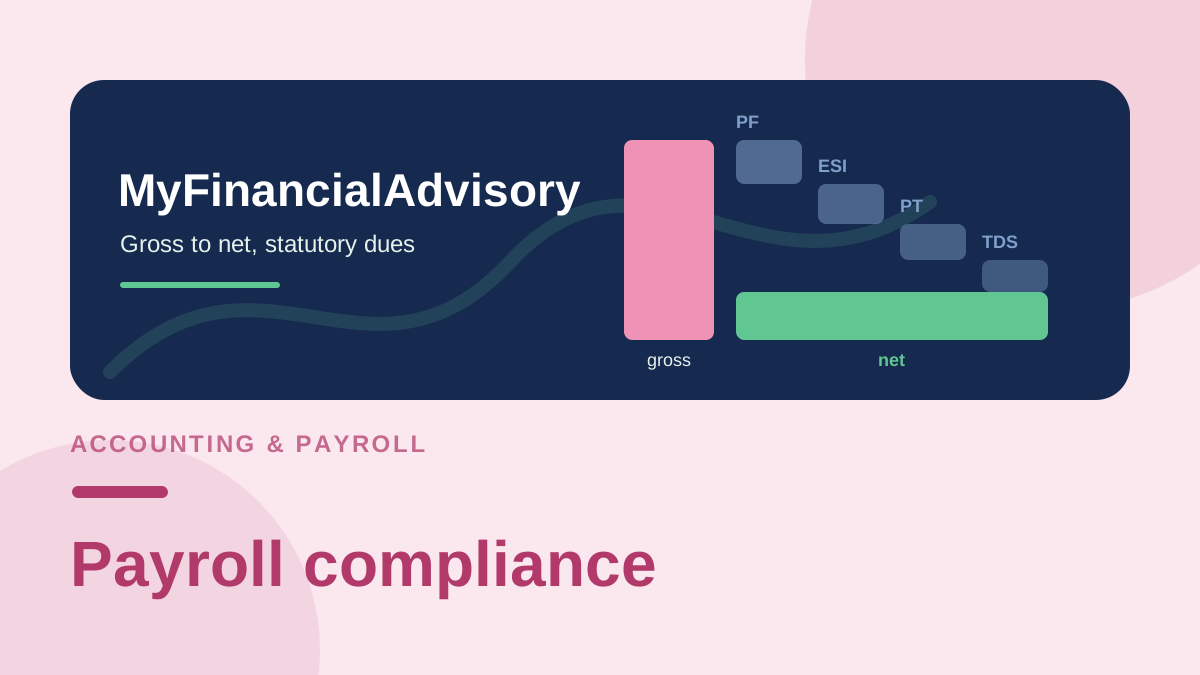
What Counts as "Wages" for PF, ESI and Gratuity — and the 50% Rule
The contribution rates did not change when the Labour Codes commenced. The base they apply to did. Section 2(y) of the Code on Wages pulls excluded allowances back into wages once they exceed half of total remuneration — and ESIC runs a completely different wage test on top of that. Here is both, with the arithmetic worked out.
Trademark
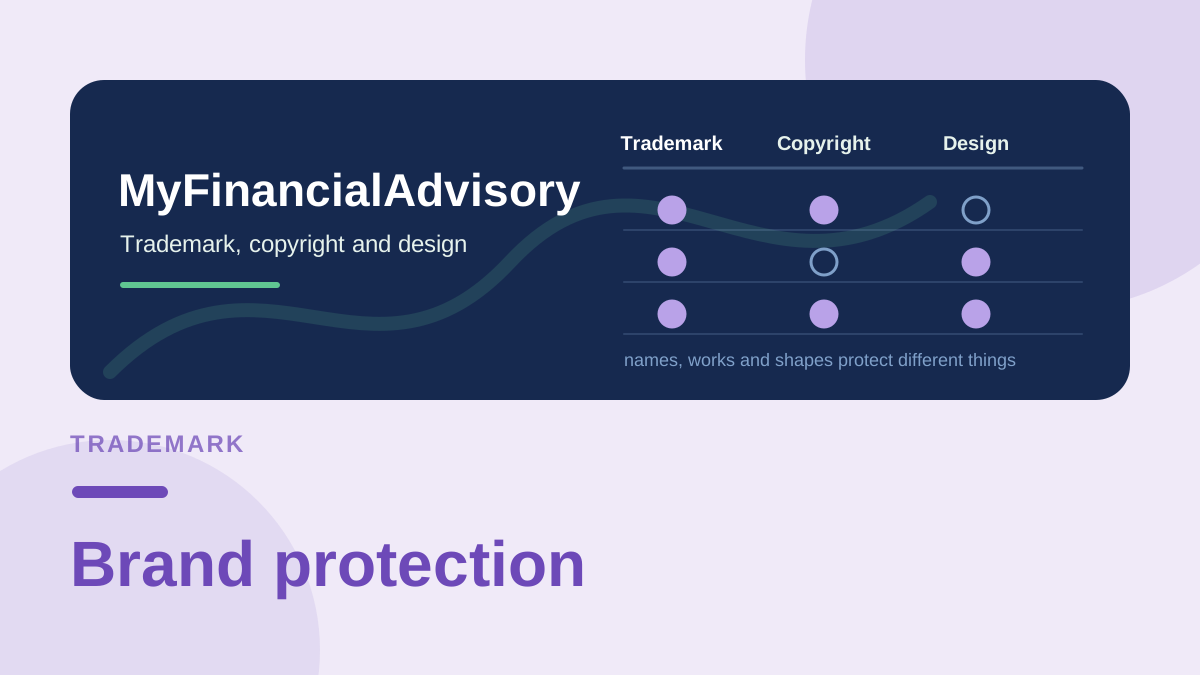
Someone Is Using Your Brand: What Infringement Actually Means, and What to Send
The Trade Marks Act nowhere requires a cease and desist notice before suing — and it makes an unjustified one independently actionable. So the notice has to earn its place. Here is what Section 29 actually catches, the defences in Sections 30, 34 and 35, and the one provision that gives a well-drafted notice real legal work to do.

Trademark
Trademark Classes and Multi-Class Filing: What the Fee Actually Buys
The government fee is charged for each class and for each mark, so classification is the single biggest lever on what a trademark costs. Here is what the Act and the Rules actually say about classes, why a class number does not decide similarity, why goods cannot be added after filing, and how a multi-class application is divided when one class runs into trouble.
Trademark
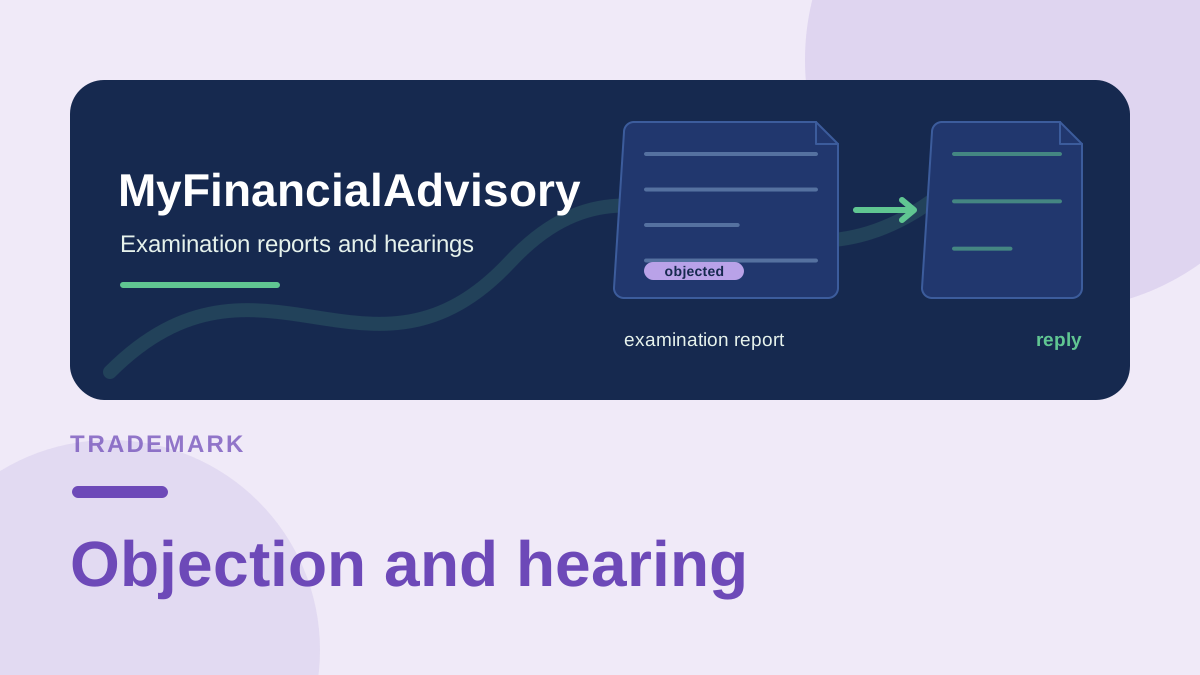
Abandoned Trademark Application: Every Deadline That Kills It, and What Is Left
Six different deadlines can end a trademark application, and they are not the same kind of deadline. Some say the Registrar "may" treat it as abandoned; two say it "shall be" or is "deemed" abandoned automatically. That difference decides whether anything can be recovered — and this is the map of which is which.
Income Tax
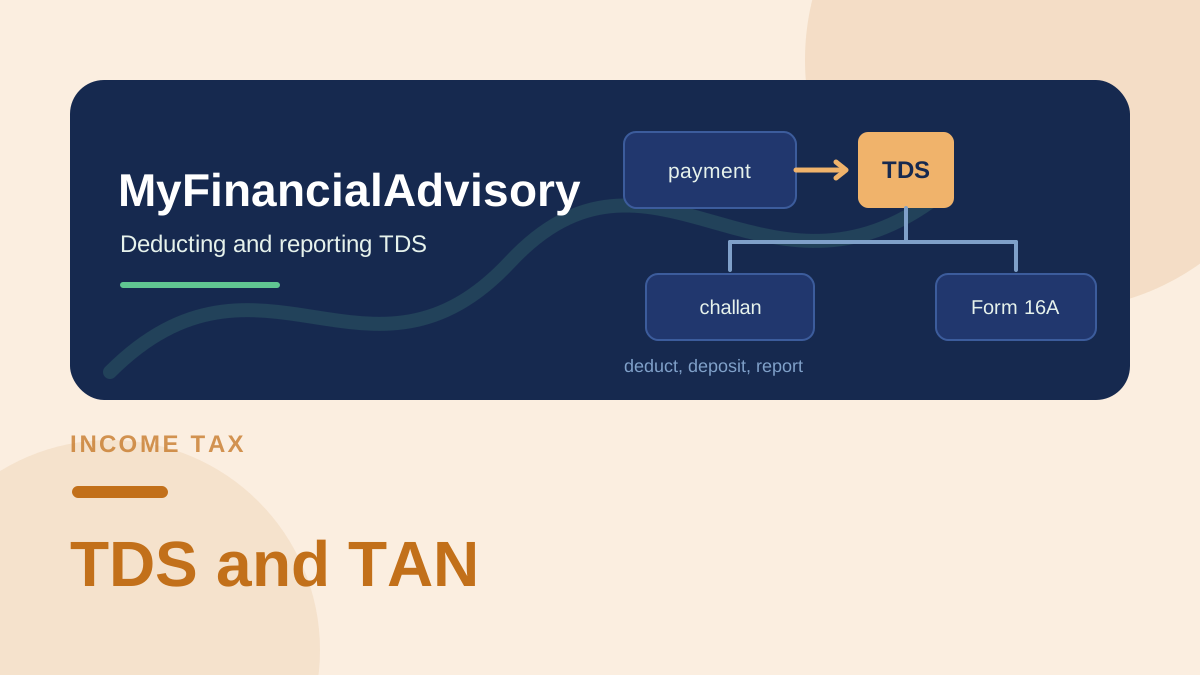
TDS on Payments to Non-Residents: Section 393(2), Treaty Relief and the Form 145 Remittance File
The complete seventeen-row section 393(2) table, what serial number 17 actually catches, treaty relief under section 159 and Form No. 41, the Rule 217 no-PAN relief, and the Form No. 145 and 146 paperwork your bank asks for before it releases the money.
Income Tax
TDS Forms Under the Income-tax Rules, 2026: Which Form, and By When
The Income-tax Rules, 2026 renumbered every TDS form. Forms 138, 140, 143 and 144 for the quarterly statements, Form 141 for the challan-cum-statement, Forms 130 to 133 for certificates, 134 and 135 for a TAN and 128 for a lower-deduction certificate — each with the rule it comes from and the date it is due.
Company Registration
Section 8 Company Registration: Licence, Conditions and Exit
A Section 8 company is a licence, not just a company — and the licence carries conditions that outlast incorporation. What section 8 actually requires, why INC-12 is probably not your form, and the exit restrictions to understand before you choose the structure.
MCA Compliance
Rule 9B: Share Dematerialisation for Private Companies
Rule 9B is not a deadline that passed in 2024. It is a rolling eighteen-month test that can catch your company at any year end — and the date was moved twice. Here is who is caught, when, and what stays blocked until you comply.

Business Registrations
The MSME 45-Day Payment Rule: Who Actually Gets It, and How to Use It
The MSMED Act caps the agreed payment period at 45 days and charges a late buyer compound interest at three times the RBI bank rate. But the remedy runs to micro and small enterprises only — medium enterprises are outside the chapter, and trading registrations are expressly excluded. Here is exactly who qualifies and what a Facilitation Council reference involves.
MCA Compliance
LLP Annual Compliance: Form 8, Form 11 and What Being Late Costs
An LLP files two MCA forms a year, and being late costs two separate things that almost every summary merges into one wrong number. The additional fee is a multiple, the penalty is per day and capped, and ₹100 a day has not been the filing rate since April 2022.
Income Tax
Revised, Belated or Updated Return: Which One Fixes Your ITR, and By When
You filed and something is wrong, or you never filed at all. Three instruments can still help — a revised return, a belated return or ITR-U — and they have different deadlines, different costs and different limits. Here is how to pick, with the dates that changed for AY 2026-27.
Company Registration
Setting Up an Indian Subsidiary of a Foreign Company
Incorporation is the easy part. The resident-director test, the apostille requirements that send SPICe+ back, and the FEMA reporting clocks that start the day shares are issued are what actually decide whether the entity is clean — with the late fee that applies when they are missed.
Business Registrations
IEC Lifetime Validity: The Half-Truth That De-activates Your Code
An Importer-Exporter Code has permanent validity and no renewal application. Both true. What that framing leaves out is FTP paragraph 2.05(d), which requires an electronic update every April to June even in a no-change year, and 2.05(e), which says an IEC not updated shall be de-activated. Here is the obligation, the fee, and the recovery route.
GST
The GST LUT — Exporting Without Paying IGST, and the Two Deadlines That Withdraw It
A Letter of Undertaking lets you export without paying IGST at all. Almost every registered person is eligible, the old ₹1 crore remittance test died in 2017, and the two deadlines that can withdraw the facility are different lengths for goods and for services — one of which was quietly rewritten in July 2024.

GST
Goods Detained in Transit — E-Way Bill Validity and What Section 129 Actually Costs Now
The detention penalty changed on 1 January 2022 and a great deal of published guidance still quotes the old formula. This sets out the current section 129 numbers, the seven-day notice and order clocks that run in your favour, and the e-way bill validity rules — including the eight-hour extension window and the fact that validity runs from the minute the bill was generated.
GST
Am I In Scope for GST E-Invoicing? The Turnover Test Is a Ratchet
E-invoicing applies where aggregate turnover in ANY preceding financial year from 2017-18 onwards exceeds ₹5 crore — not the immediately preceding year. Cross it once and you never fall back out. Rule 48(5) then says an invoice issued the wrong way is not an invoice at all, which is your customer's credit problem as much as your compliance one.
GST
Appealing to the GST Appellate Tribunal — Limitation, Pre-Deposit and Which Bench
The second appeal in GST runs to the Appellate Tribunal under section 112. This sets out when the three-month clock actually starts, the second 10% pre-deposit stacked on top of the first, the ₹25,000 fee ceiling in Rule 110, the filing-date trap for orders not on the portal, and why a place-of-supply issue can only be heard in New Delhi.

Accounting & Payroll
Gratuity Under the Social Security Code: Section 53, and the Ceiling Nobody Has Notified
The Payment of Gratuity Act, 1972 was repealed on 21 November 2025. Gratuity now lives in Section 53 of the Code on Social Security — five years' service with four exceptions, 15 days' wages per year on the wages last drawn, and a maximum that Section 53(3) leaves to a notification we could not find. Here is what is settled and what honestly is not.
Company Registration
Why MCA Rejects Company Names — and How to Fix It
A rejected name is the most common way an incorporation loses two weeks. These are the grounds MCA itself publishes, what each one actually means, how many resubmissions you get, and the withdrawal step people miss when re-applying.
MCA Compliance
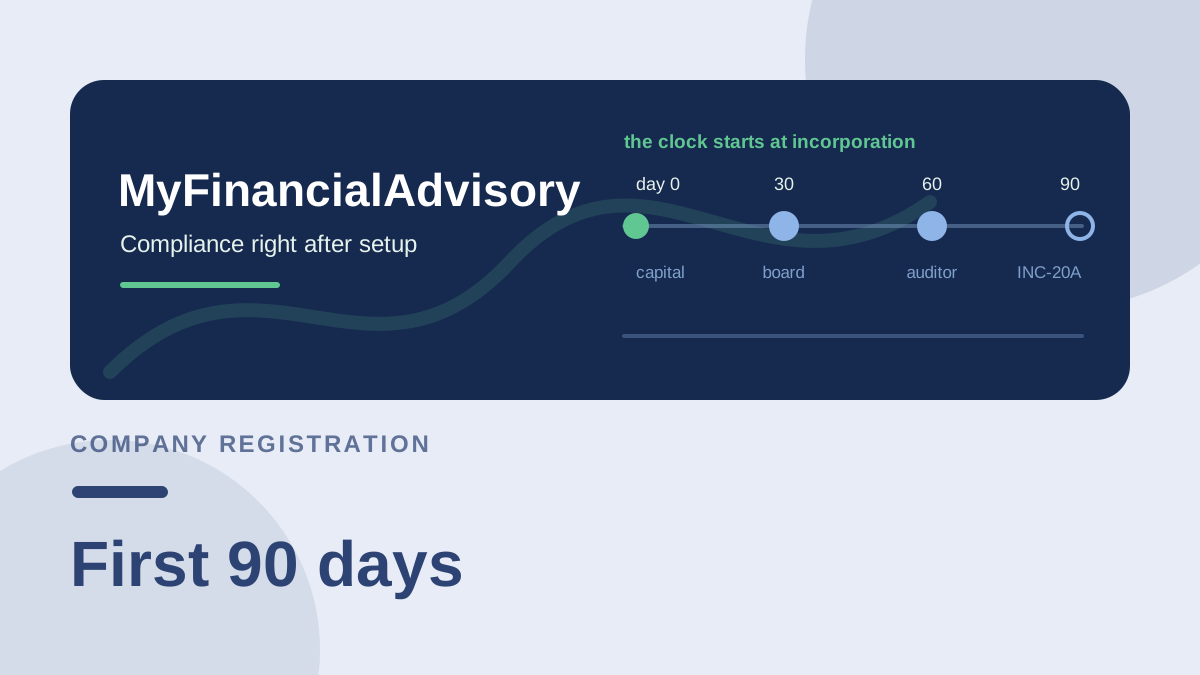
Your Company's First Financial Year and First AGM
Every first-year deadline a company has descends from one date — the date on the certificate of incorporation. Here is the derivation, including the section 2(41) rule that gives a company incorporated in January a fifteen-month first year.
MCA Compliance
Strike Off, Dormant or Winding Up: Choosing a Company Exit
Four ways out of a company you no longer want, and they are not interchangeable. The eligibility bars decide for you — including a three-month lookback in section 249 that quietly disqualifies most applicants before they file.
Company Registration
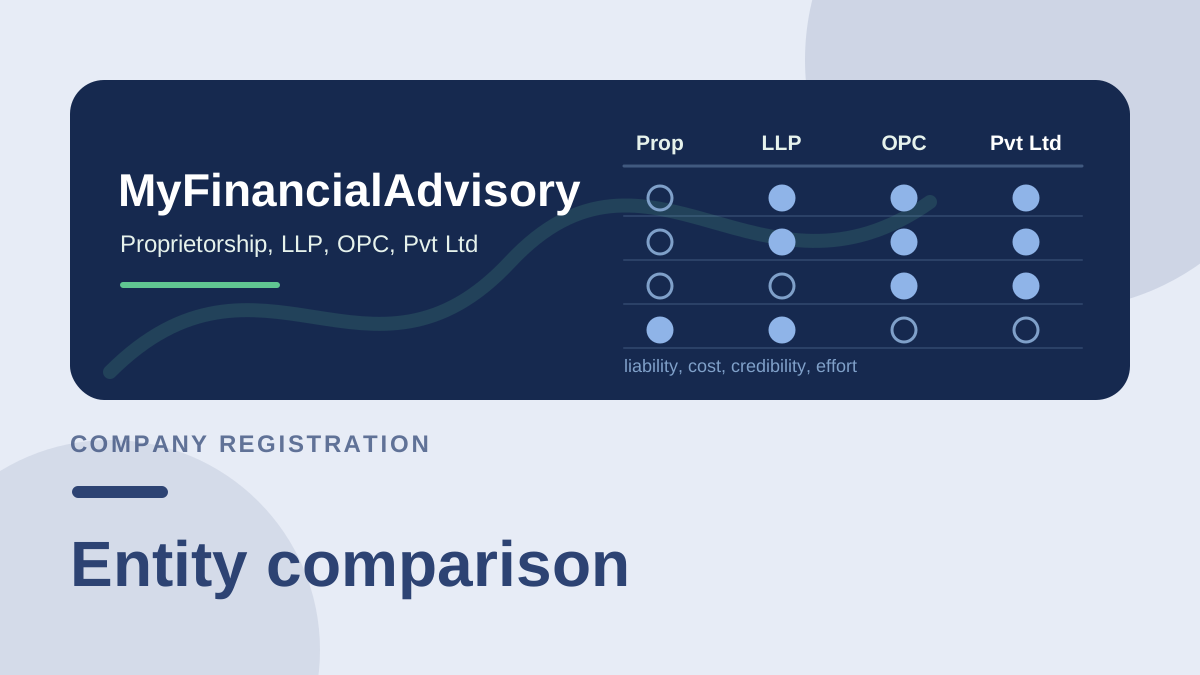
Choosing a Business Structure in India: A Decision Guide
Five structures, and the choice is usually made on the wrong dimension. What each actually costs to own for a year, how hard each is to close, and what it costs to switch — the three things that decide it and that setup-cost comparisons never show.

Income Tax
Capital Gains Tax in India: Holding Periods, Rates and What You Actually Pay
You sold shares, a flat, gold or a mutual fund. This is how the gain is classified and taxed — the two holding periods, the 20% and 12.5% rates, the ₹1,25,000 exemption, the end of indexation, and the relief for land bought before 23 July 2024.
Income Tax
Advance Tax in India: Who Has to Pay, What Each Instalment Is, and What Interest Costs
The ₹10,000 test in section 404, the A = B − C computation in section 405, the four cumulative instalments in section 408, and exactly how interest under sections 424 and 425 is charged — including the section 425(4) exclusion that removes it for a capital gain you could not have foreseen.
Trademark
Section 9 Trademark Objection: Distinctiveness, Evidence and Reply
A Section 9 objection says your mark is not distinctive enough to be a trademark. Here is what the statute actually requires, which arguments carry weight, the evidence that supports acquired distinctiveness, and the deadline that decides whether you get to argue at all.
Trademark
Section 11 Trademark Objection: Cited Marks and How to Answer Them
A Section 11 objection lists other people's marks against yours. The fastest win is usually the one nobody checks — the current legal status of every mark cited. Here is how to triage citations, what the statute says a lapsed or removed mark is worth, and the five routes the Registry itself recognises.
Income Tax
TDS Section Crosswalk: Old 194 Sections to Sections 392, 393 and 394 of the Income-tax Act, 2025
Every familiar TDS section mapped to the provision that actually governs a deduction made today, with rates, thresholds, payer categories and the exemptions that sit outside the rate table.
Income Tax
Income Tax Notice Types and How to Respond: A Triage Guide for Business Owners
Every common income tax notice and intimation in one triage table — what triggers it, the clock you are on, your first move, and what silence costs. Plus why a notice you receive today may still quote the 1961 Act's section numbers, and why that is correct.
Income Tax
The Income-tax Act, 2025: What Actually Changed for an Indian Business from 1 April 2026
The new Act commenced on 1 April 2026, but it does not govern your AY 2026-27 return. This is what genuinely changed, what was only renumbered, and what to fix in your systems before the next quarter closes.
Business Registrations
FSSAI Registration Guide
Starting a food business? You need an FSSAI registration or licence first. Here is the process, the documents, the timeline and the tier that applies to you.
GST
GST Return Filing Guide
The GST return cycle taken from the CGST Act and Rules — what GSTR-1 and GSTR-3B each do, the real due dates and which ones are only for QRMP filers, the annual return thresholds, late fees with their caps, and the three-year bar that now closes old periods for good.
Company Registration
Private Limited Company Registration Process in India
The full SPICe+ route, form by form — name reservation, Part B, eMoA/eAoA, AGILE-PRO-S, the government fees that actually apply, why applications get sent back, and every post-incorporation deadline with the section behind it.
Income Tax
TDS Return Filing Guide
The full TDS cycle for a deductor — TAN, deduction, deposit by the 7th, the quarterly 24Q/26Q/27Q statement, Form 16 and 16A, and the fees, interest and penalties when a step slips. Updated for the section 392/393/394 renumbering from 1 April 2026.

Accounting & Payroll
Monthly Accounting Services for Startups
Year-end accounting is where startups discover their numbers were wrong all along. Monthly accounting fixes that. Here's why startups should account monthly, and what a good package covers.
GST
GST Notice Reply Guide
A calm guide to GST notices — what the common ones mean, how to read them, how to reply correctly, the deadlines you cannot miss, and when a notice needs professional help.
Company Registration
Private Limited Company vs LLP
Private limited company or LLP? A practical comparison across liability, compliance burden, taxation, raising investment and cost — so you pick the structure that fits your plan.
Startup Compliance
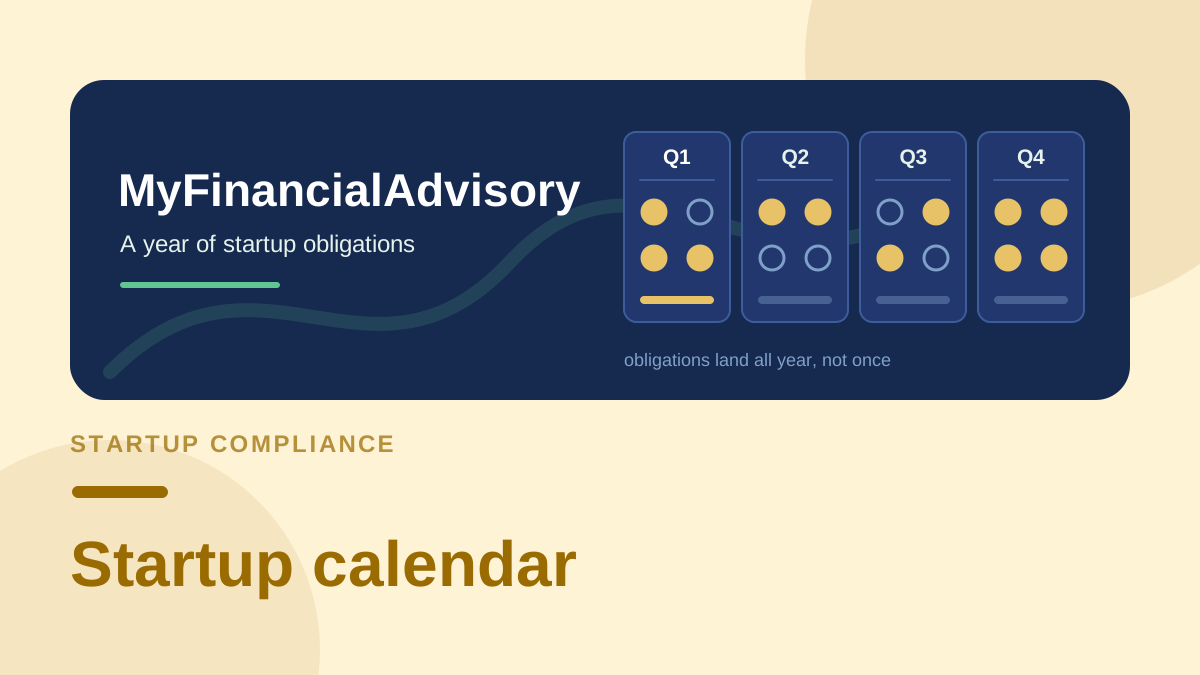
Startup Compliance Checklist India
The first-year compliance checklist every Indian startup needs after incorporation — immediate filings, the registrations to assess, periodic obligations, annual filings and what slipping actually costs.
GST
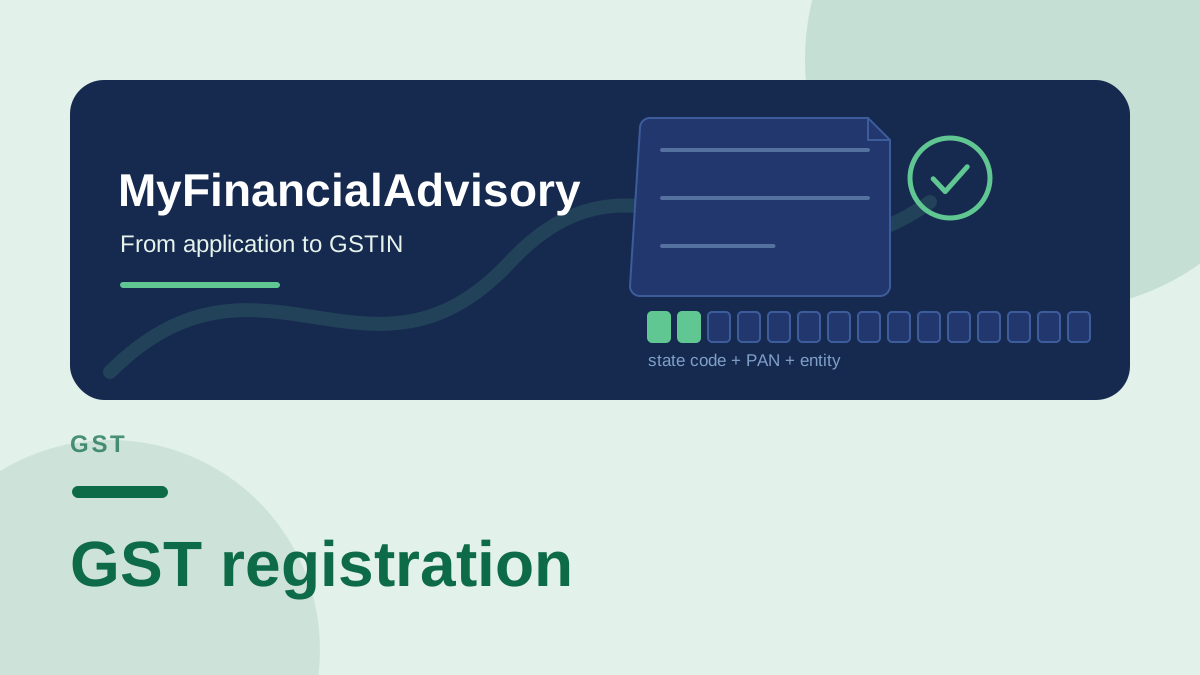
GST Registration Process in India
What the CGST Act and Rules actually require to get a GSTIN — the real turnover thresholds State by State, the thirty-day clock and what missing it costs, the REG-01 to REG-06 sequence, and the rejection paths with a way out of each.
Trademark
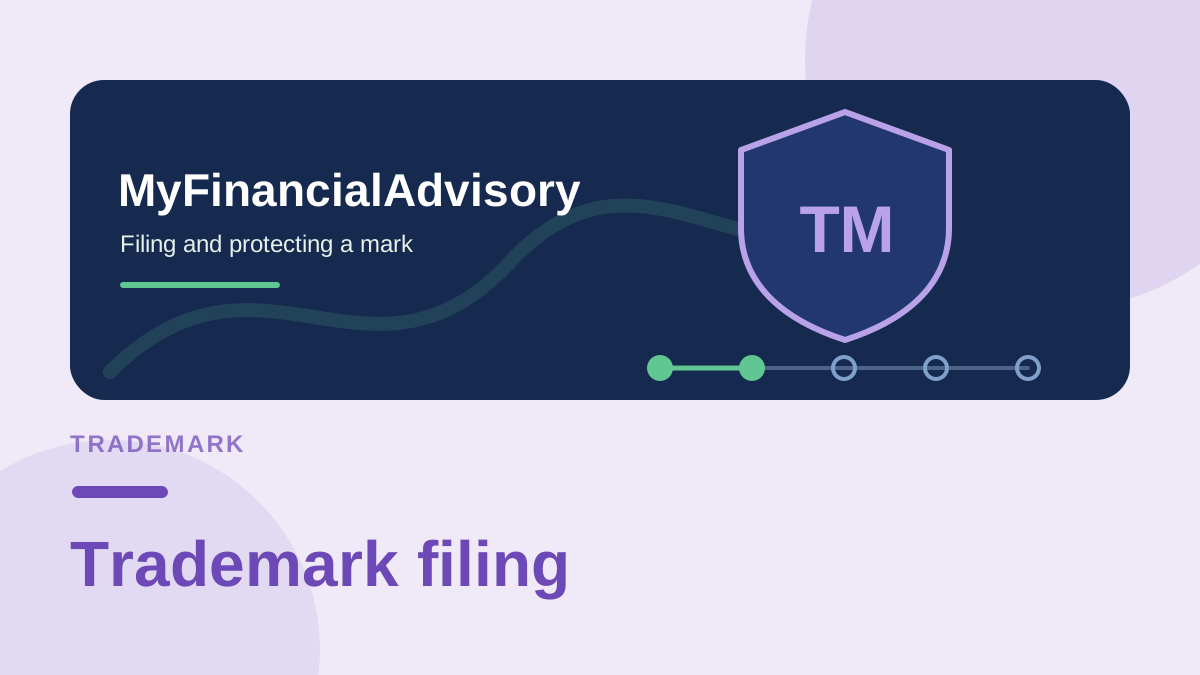
Trademark Registration Process in India
Trademark registration is a sequence of statutory stages, not a single filing. Here is the full path from search to the R symbol — the forms, the fees, the statutory deadlines at every stage, what happens when an objection or an opposition lands, and how to file something that survives examination.
Business Registrations
Import Export Code Registration Guide
Want to import or export from India? You need an IEC first. Here is what the Import Export Code is, how to get it, the annual update people forget, and what else you need to actually ship.
GST
GST Registration Documents Checklist
The exact documents needed for GST registration, grouped by what they prove — identity, business constitution, place of business and bank — plus the formatting that quietly causes rejections.
Accounting & Payroll
Payroll Compliance Checklist for Indian Employers
PF, ESI, professional tax and salary TDS — thresholds, the monthly and annual calendar, a CTC-to-net-pay worked example, and what actually changed when the four Labour Codes came into force on 21 November 2025.
Company Registration
Documents Required for Company Registration
Exactly which documents you need to register a company in India — for directors and shareholders, for the registered office, and the extras for foreign nationals — plus the mistakes that delay incorporation.
Income Tax
Income Tax Return Filing for Business Owners
The whole compliance year for someone running a business with books, staff and vendors — ITR-3 versus ITR-4, the section 58 presumptive arithmetic, books and audit, the 31 August and 31 October dates, and the TDS your own business now owes.
Trademark
Trademark Class Finder Guide
Trademark classes decide what your registration actually protects. Here is how the 45-class NICE system works, how to find your class, when you need more than one, and why the wrong class is costly.
Trademark
Trademark Objection Reply Guide
Got a trademark examination report? Here is why marks get objected, the difference between Section 9 and Section 11 objections, how to draft a strong reply, the deadline, and what happens at a hearing.
MCA Compliance
DIR-3 KYC Guide
DIR-3 KYC explained — what it is, who must file and by when, the difference between the form and the web service, what happens when your DIN deactivates, and how to reactivate it.
MCA Compliance
ROC Annual Filing Checklist
Every ROC filing a company owes each year, the forms, the fees, and the one deadline rule most summaries get wrong — with a worked derivation and an incorporation-month deadline table.
Business Registrations
Udyam Registration Benefits
Udyam (MSME) registration is free of government fee and quick — and the benefits are real. Here is what MSME recognition actually gets you, from cheaper credit to delayed-payment protection.
Income Tax
Income Tax Return Filing Guide: Forms, Due Dates & Documents
Who has to file, which ITR form fits, what documents to gather, and the AY 2026-27 due dates — 31 July, 31 August, 31 October — with the fees, interest and repair routes if something goes wrong.
Business Registrations
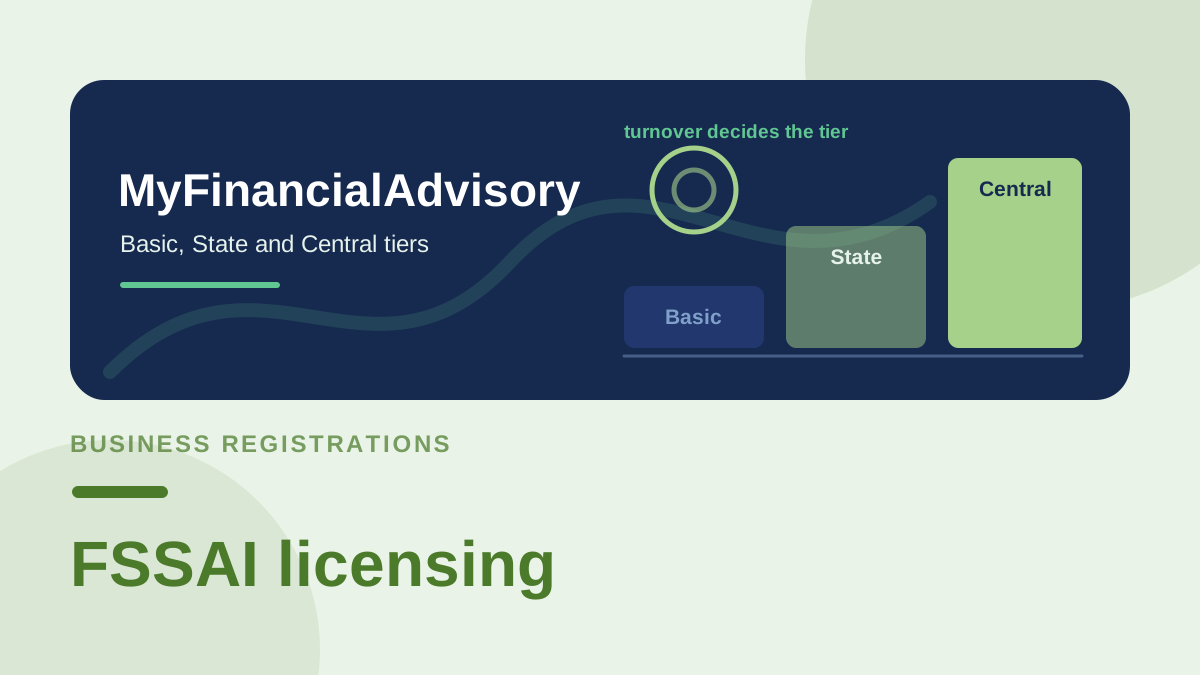
FSSAI License Types: Basic Registration, State & Central Explained
Basic Registration, State Licence or Central Licence? Which FSSAI category applies depends on your turnover and activity. Here is how to tell, and what each one needs.
Accounting & Payroll
Bookkeeping Checklist for Small Businesses
Clean books don't happen by accident. Here's a practical monthly bookkeeping checklist for small businesses — what to record, reconcile and review so your filings always tie out.

Global Business
UAE Company Registration Guide for Indian Founders
The UAE is one of the most popular global bases for Indian founders. Here's how free zone, mainland and offshore differ, what the new corporate tax means, and how to choose.
Income Tax
ITR Filing for Freelancers: Presumptive 44ADA, Expenses & Advance Tax
No employer, no Form 16, and often no TDS. A freelancer's filing worked end to end — the presumptive 50% against real expenses, the audit trap under it, advance tax computed net of client TDS, the 31 August due date, and reconciling AIS before you file.

Global Business
USA Company Registration Guide for Indian Businesses
LLC or C-Corp? Delaware or Wyoming? Here's how Indian founders register a US company, get an EIN, and handle the foreign-owned filing duties most people miss.
Business Registrations
MSME vs Udyam Registration: What's the Difference?
"MSME registration" and "Udyam registration" confuse a lot of founders. Here is the simple truth — they are now the same thing — and what replaced the old Udyog Aadhaar.
Business Registrations
Shop Act Registration Guide: Shops & Establishment, State by State
Almost every shop and office needs Shops & Establishment registration soon after starting — but the rules are state-specific. Here is what it is, why banks ask for it, and how to register.
Income Tax
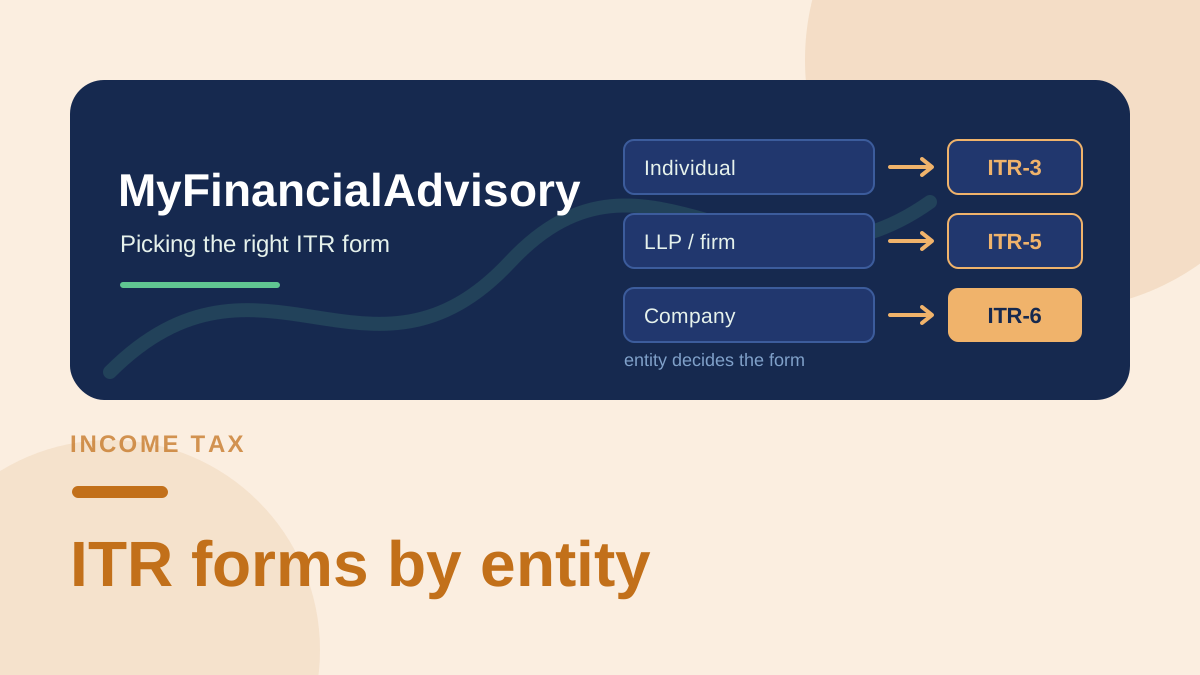
Company ITR Filing Guide: ITR-6, Tax Audit & Due Dates
A company's income-tax year end, start to finish — which return form, what feeds it, when the tax audit report is due, the 31 October date and the transfer-pricing exception, the company's own obligations as a deductor, and what a late return costs. Answered separately for assessment year 2026-27 and tax year 2026-27, because both are open at once.

Accounting & Payroll
GST Accounting Explained: Keeping Books and Returns in Sync
GST touches every sale and purchase, so your books and your GST returns have to agree. Here's how GST flows through your accounting — and how to keep input credit from slipping.
Global Business
Singapore Business Setup Guide for Indian Founders
Singapore is Asia's most credible business hub — but it needs a resident director and a company secretary. Here's how Indian founders set up a Singapore company.
Income Tax
LLP ITR Filing Guide: ITR-5, Audit Triggers, Due Dates and Partner Payments
An LLP's income-tax year end to end — ITR-5 every year whether or not it traded, the two independent audit triggers, the due dates that also fix the partners' dates, and the 10% deduction on payments to a partner that catches more LLPs than anything else.
Business Registrations
Professional Tax Registration Guide: PTEC, PTRC & States
Professional tax trips up many employers — it is a state tax, with two different registrations, levied in some states but not others. Here is PTEC vs PTRC, who needs what, and the deadlines.

Accounting & Payroll
Virtual CFO Services for Startups: When You Need One
A Virtual CFO gives startups senior finance leadership without a full-time hire. Here's what a VCFO actually does, when you need one, and how it differs from an accountant.
Income Tax
TAN Registration: Who Needs One, Who Does Not, and How to Apply
A TAN is not a formality every deductor has to complete. Some of the most common deduction obligations in India are expressly exempt from it. Here is the test, the application forms under Rule 216, and what the number obliges you to do once you hold it.
Global Business
UK Company Registration Guide for Indian Founders
The UK is fast, cheap and globally respected to incorporate in, with no director-residency requirement. Here's how Indian founders register a UK Ltd with Companies House.
Accounting & Payroll
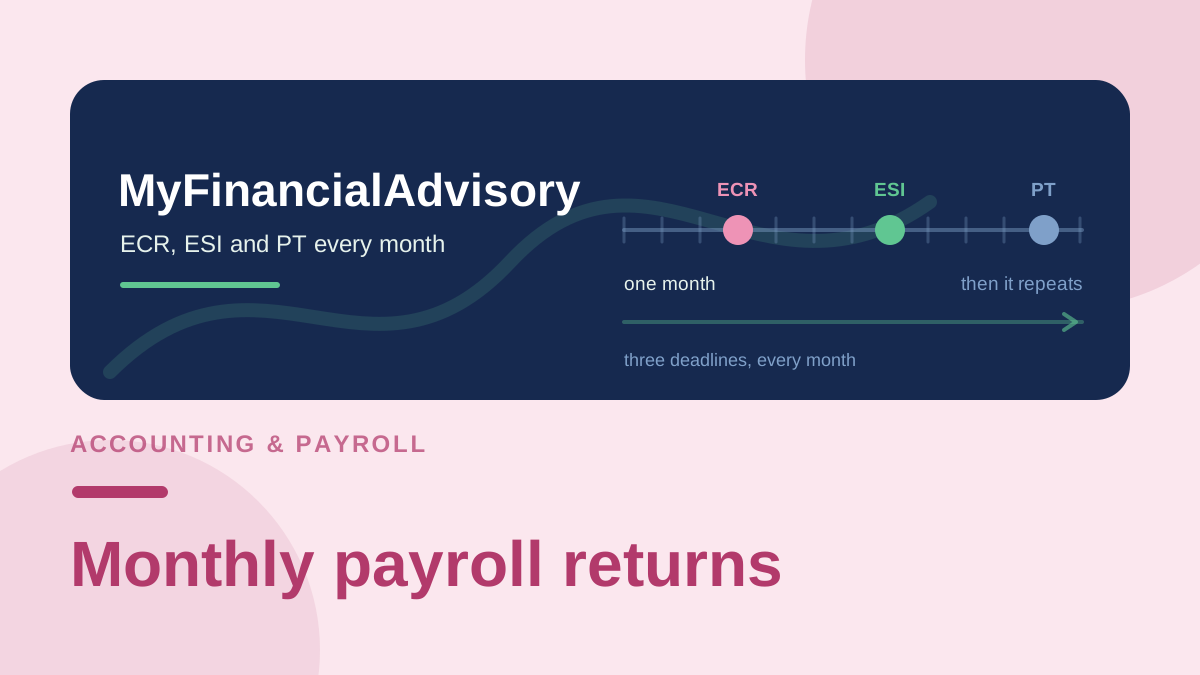
PF Return Filing Guide: Monthly EPF ECR, Step by Step
PF registration is one-time; PF returns are monthly. Here's how the EPF ECR works, the due date, what happens if you're late, and how to keep employees' credit clean.
Business Registrations
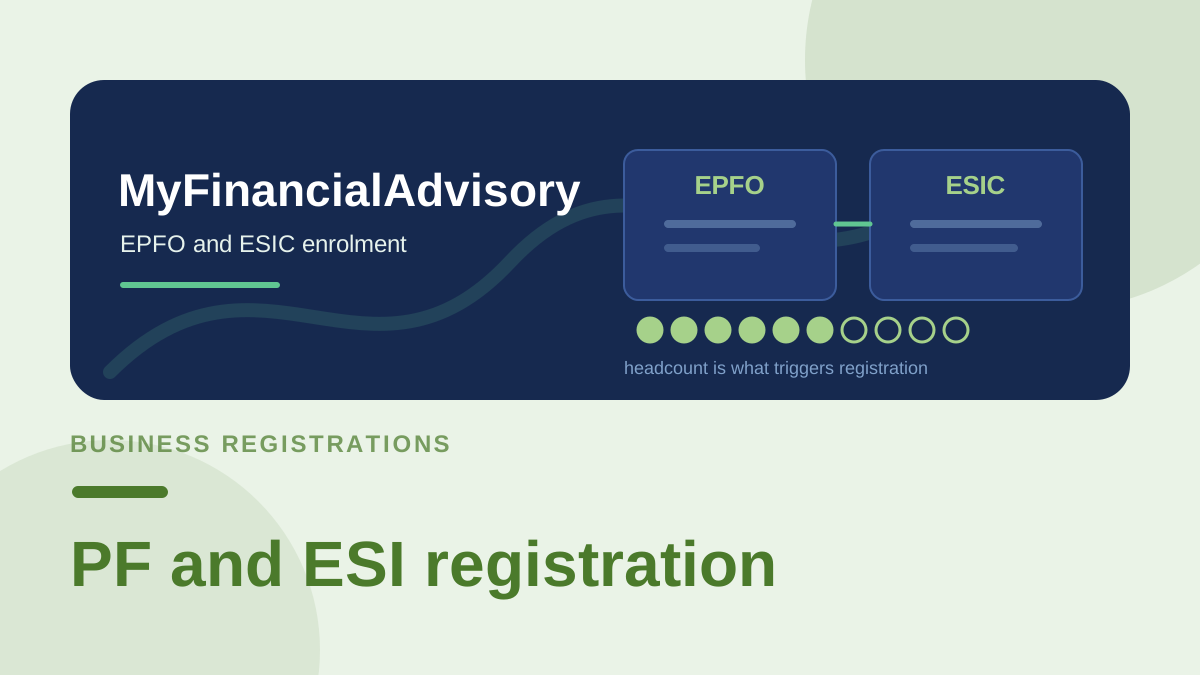
PF and ESI Registration Guide for Employers
PF and ESI are the two big employer registrations — with different thresholds, bodies and benefits. Here is when each kicks in, what you contribute, and the monthly compliance they bring.
Global Business
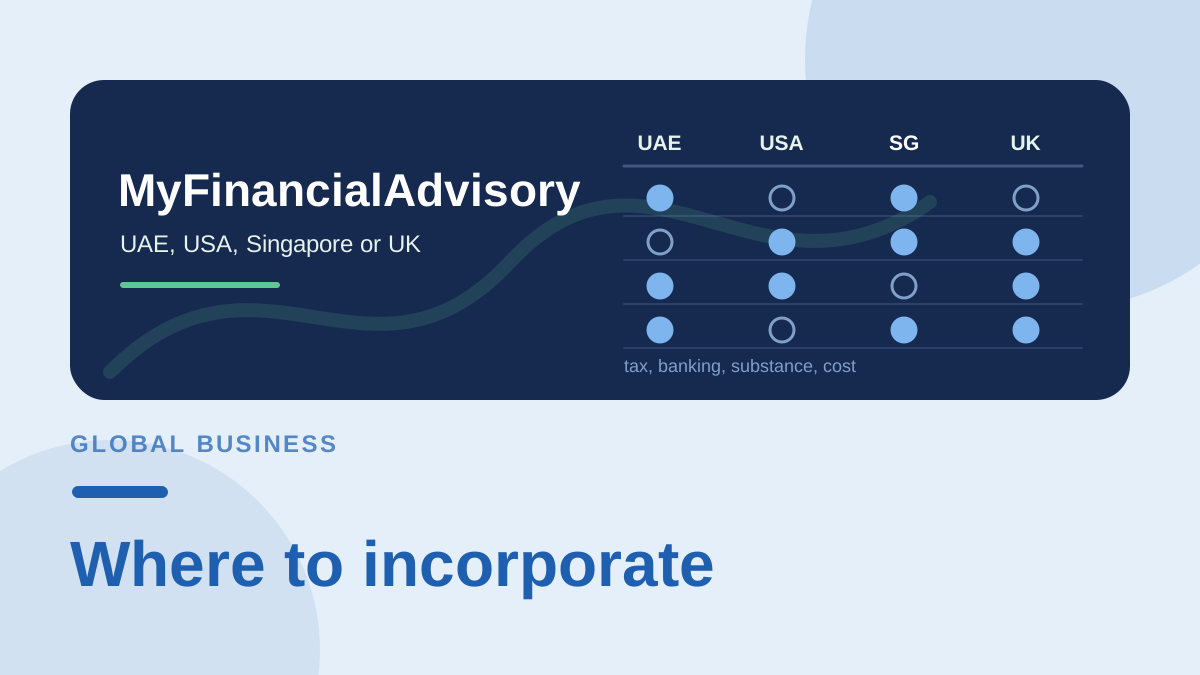
UAE vs USA vs Singapore vs UK: Where Should You Incorporate?
Four popular jurisdictions, four very different trade-offs. Here's an honest comparison of the UAE, USA, Singapore and UK to help Indian founders decide where to incorporate.
Accounting & Payroll
ESI Return Filing Guide: Monthly ESIC Contributions
After ESI registration, contributions are a monthly job. Here's how ESI return filing works, who's covered, the due date, and how to keep your team's benefits intact.
Business Registrations
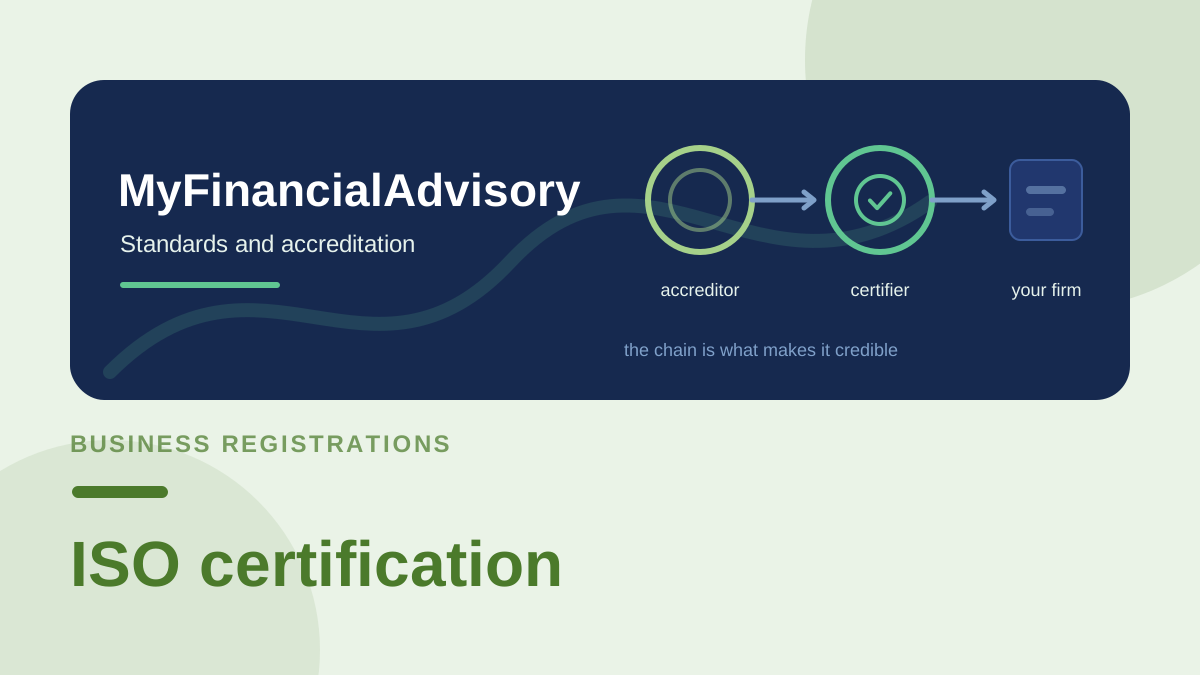
ISO Certification Guide: Standards, Process & Accreditation
ISO certification can boost credibility and win tenders — but only if it is real. Here is how to pick the right standard, what the process looks like, and why accreditation is the detail that matters.
Income Tax
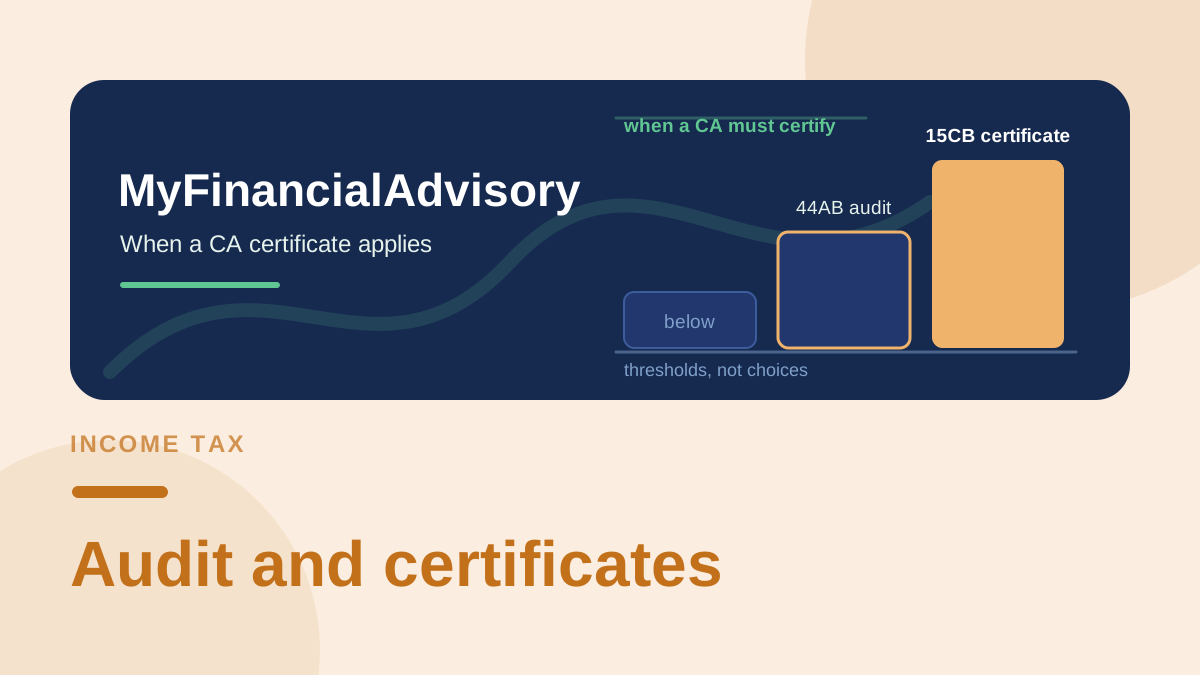
15CA and 15CB Filing Guide: Foreign Remittance Reporting, and the Forms That Replaced Them
The remitter's paperwork journey for a payment to a non-resident — which part of the form you file, when an accountant's certificate is required, why the bank will not release the money without it, and what Forms No. 145 and 146 changed on 1 April 2026.
Accounting & Payroll
Professional Tax Return Filing Guide: PTRC, Schedules & States
If your state levies professional tax, filing the returns is a recurring job with state-specific schedules. Here's how PT return filing works, who files what, and the deadlines.
Income Tax
Tax Audit Applicability: When Section 44AB Applies
Whether a tax audit applies to you, answered for both years that are open at once — section 44AB for AY 2026-27 and section 63 for tax year 2026-27 — with the turnover tests, the presumptive trap, the books-of-account obligation that bites far lower, and what a late report now costs.

Global Business
Documents Required for International Company Registration
Incorporating abroad stalls most often on documents. Here's the common KYC set and the jurisdiction-specific extras for the UAE, USA, Singapore and UK.
Business Registrations
NGO 12A and 80G Registration Guide
For an NGO, 12A and 80G are the registrations that make it tax-exempt and fundable. Here is what each does, how the 12AB regime and renewals work, and the order to get them.

Global Business
USA Trademark Registration Guide for Indian Brands
Selling to US customers? A US trademark protects your brand with the USPTO. Here's how registration works, what a use-in-commerce filing means, and the common pitfalls.
Income Tax
Old vs New Tax Regime for Business Owners: How to Choose
The regime decision as a business owner actually faces it — the AY 2026-27 new-regime slabs and the section 87A rebate, why the option under section 115BAC(6) binds you differently than it binds a salaried filer, and how the choice moves your advance tax from the June instalment onward.
MCA Compliance
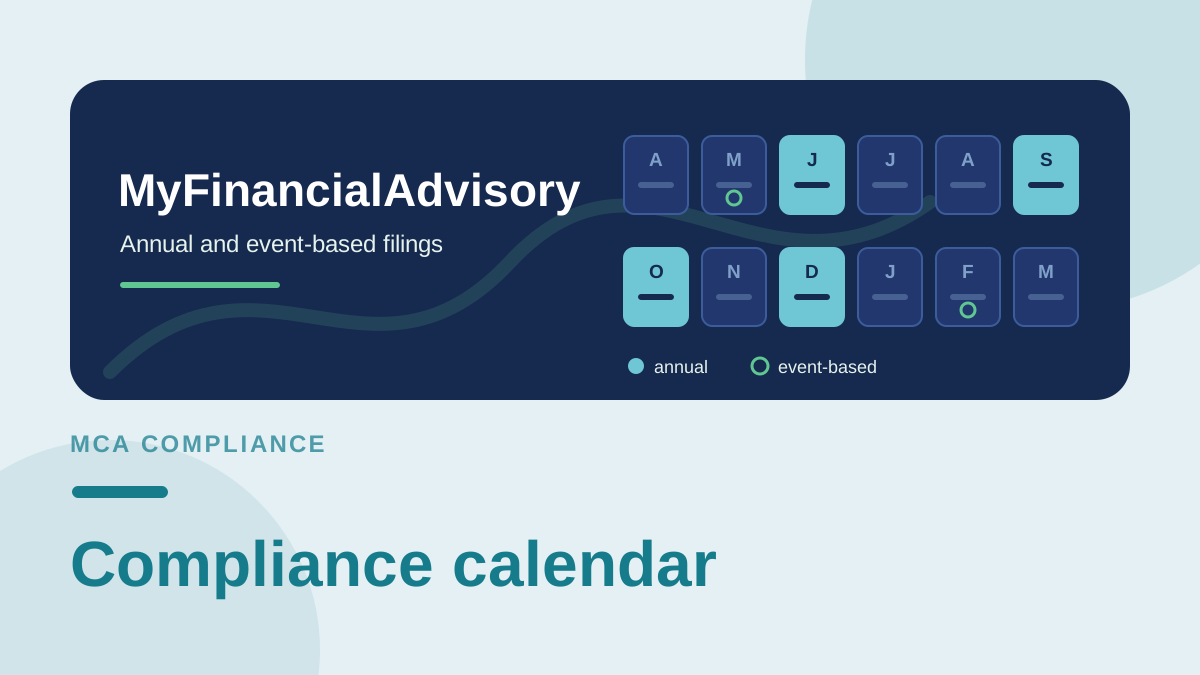
Company Compliance Checklist: Annual & Event-Based
The full compliance load on a private limited company — first-year filings, the annual cycle, and the event-based forms — with sections, time limits, real fees and a worked first-year timeline.
Company Registration
Proprietorship vs Private Limited Company: Which Should You Choose?
Start simple as a proprietor, or incorporate a Private Limited Company? The right choice depends on liability, funding and growth plans. Here is a clear, honest comparison.
Accounting & Payroll
Legal Documents Every Startup Needs
Most startup disputes trace back to a missing or weak document. Here are the legal documents every startup should have in place — from founders' agreements to employment contracts and NDAs.
MCA Compliance
LLP Closure Process in India (Form 24)
An inactive LLP keeps accruing steep, uncapped late fees on Form 8 and Form 11. Here is how to close it cleanly via Form 24 strike off.
Global Business
International Trademark Registration Guide: The Madrid Protocol
Protecting your brand in many countries one-by-one is slow and costly. The Madrid Protocol lets you file internationally from one application. Here's how it works.
Company Registration
LLP Registration Process in India: A Step-by-Step Guide
FiLLiP, DPIN, name reservation and the LLP agreement — with the government fee at every step, the 120-day residence test people confuse with the company rule, and what actually sends a FiLLiP back.
Accounting & Payroll
Board Resolution Format and Use Cases
Companies record decisions through board resolutions — for banks, the ROC and more. Here's the typical format, common use cases, and how to pass one correctly.
Company Registration
OPC Registration Process in India: A Solo Founder's Guide
A One Person Company lets a single founder run a company with limited liability. Here is the full OPC registration process, the nominee requirement, and how it differs from a proprietorship.
Startup Compliance
DPIIT Recognition: Benefits and Process Explained
DPIIT recognition is the certificate that turns your company into an officially recognised startup — unlocking tax holidays, angel-tax exemption and IPR benefits. Here is what it gives you and how to get it.
MCA Compliance
Registered Office Change Process in India
Moving your company's registered office? The process depends on whether you move within the city, across ROCs, or to another state. Here is what each route needs.
Global Business
Global Expansion Checklist for Indian Startups
Going global is more than incorporating abroad. Here's a practical checklist for Indian startups — entity, banking, tax, IP, contracts and compliance — so nothing is missed.
Company Registration
Post-Incorporation Compliance for a Private Limited Company
Incorporation is day one — the compliance clock starts immediately. Here is the first-year checklist every Private Limited Company must follow: INC-20A, auditor, share certificates, KYC and annual filings.
Startup Compliance
Startup India Registration Guide: Eligibility, Process & Benefits
Startup India recognition unlocks tax holidays, angel-tax exemption, IPR rebates and easier procurement. Here is who qualifies, how to apply, and how to actually claim the benefits.
Trademark
Trademark Hearing Process: What to Expect
If your objection reply wasn't accepted, your trademark is set down for a show-cause hearing. Here is what a hearing is, how it works, and how to prepare to win.
Trademark
Trademark vs Copyright: What's the Difference?
Trademark and copyright protect different things, and many businesses need both. Here is a clear comparison of what each covers, how they arise, and when to use which.
MCA Compliance
Company Name Change Process in India
Changing a company's name is more than updating letterheads — it alters the MOA and needs a fresh Certificate of Incorporation. Here is the full step-by-step process.
MCA Compliance
Company Closure Process in India (Strike Off)
Have a company you no longer use? Leaving it open means mounting penalties. Here is how to close it cleanly via strike off under Section 248 (STK-2).
MCA Compliance
Director Addition and Removal Process in India
Adding or removing a company director is a formal MCA process, not just a board decision on paper. Here is how appointments (DIR-12) and resignations or removals (DIR-11, Section 169) actually work.

Trademark
Trademark Renewal Process: Keep Your Brand Alive
A trademark lasts 10 years — then it must be renewed, or you can lose it. Here is how renewal works, the grace and restoration windows, and how to never miss it.
MCA Compliance
MGT-7 Filing Guide: Your Company's Annual Return
MGT-7 is your company's annual return — a snapshot of shareholding, directors and the year's changes. Here is what it captures, when it is due, and how it differs from AOC-4.
Trademark
Trademark Registration Cost in India (2026)
The government fee is ₹4,500 or ₹9,000 per class per mark online, set by the First Schedule to the Trade Marks Rules, 2017 — and that is only the first line of the bill. Here is every official fee across the life of a trademark, what drives the total, and how to read a quotation that blends the two kinds of cost.
Trademark
Trademark Search Before Filing: Why It Matters
Filing a trademark without searching first is how brands waste a government fee and months of time. Here is why a search matters, what it covers, and how to read the results.
Trademark
Trademark Opposition Explained: The 4-Month Window
After a trademark is accepted, anyone can oppose it for four months. Here is how opposition works, the stages involved, and how to oppose a copycat or defend your own mark.
Global Business
Foreign Company Compliance Basics for Indian Founders
Incorporating abroad is the easy part — keeping the entity compliant is the ongoing one. Here's what annual compliance looks like across the UAE, USA, Singapore and UK.
Company Registration
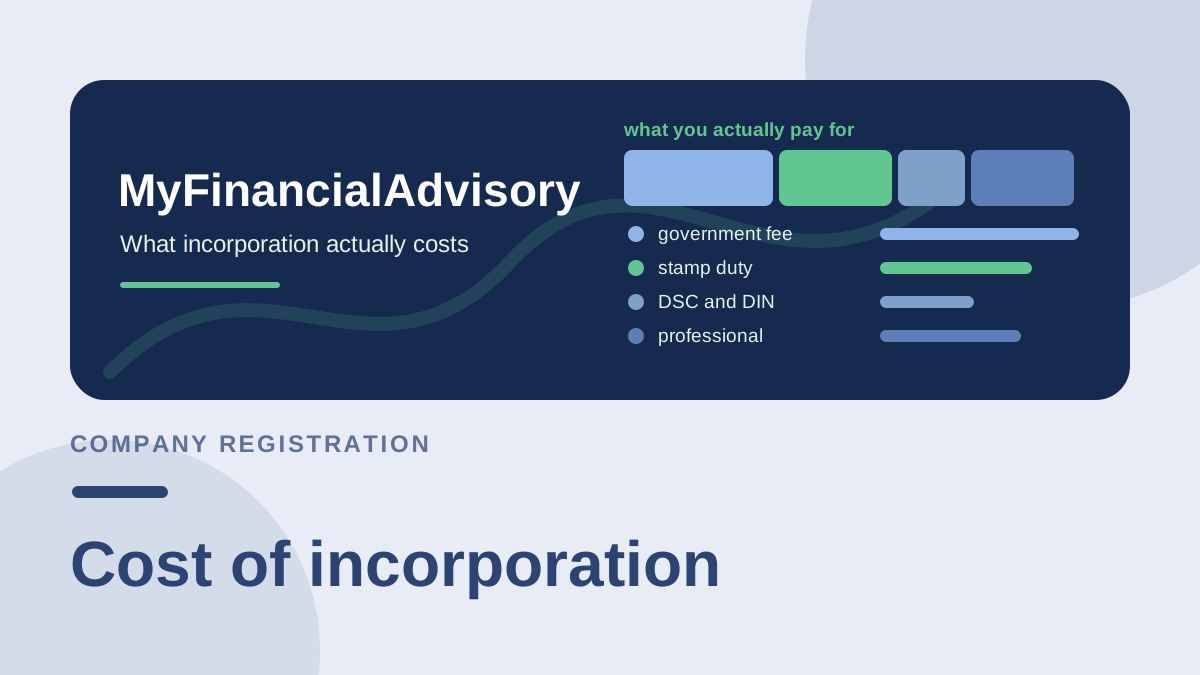
Private Limited Company Registration Fees and Cost in India
The government fee is zero below ₹15 lakh authorised capital. Stamp duty is not, and it runs from ₹41 to ₹10,025 depending on your state. A line-by-line build-up of what incorporation actually costs, with a state-by-state stamp-duty matrix and a worked total for a two-director company.
MCA Compliance
AOC-4 Filing Guide: How to File Your Company's Financials
AOC-4 is the MCA form for filing your company's audited financial statements. Here is what it includes, when it is due, the attachments it needs, and the late fee for getting it wrong.
Trademark
How to Protect a Brand Name in India: The Full Playbook
A great brand name is worthless if a competitor can use it too. Here is the step-by-step playbook to legally protect a brand name in India — search, class, file, monitor and enforce.
GST
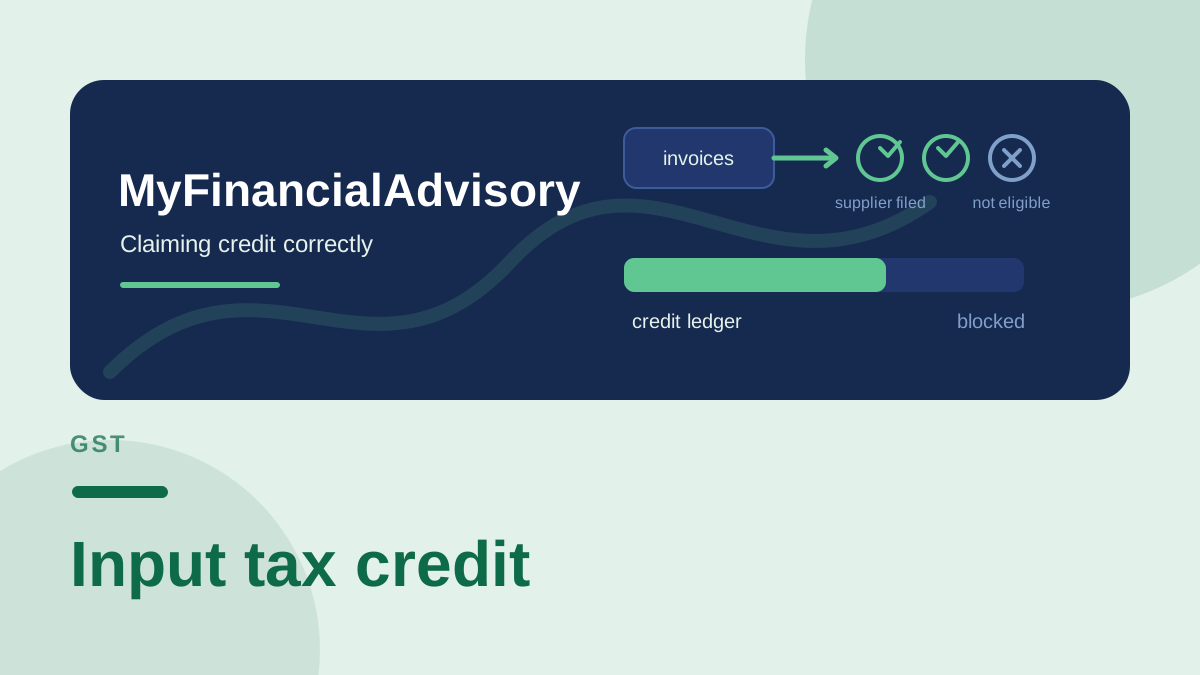
GST Input Tax Credit Explained (Eligibility, Conditions & Mistakes)
Input tax credit is conditional, and section 16(2) sets six conditions that must all hold — including two most summaries omit. This works through them from the Act, the 30 November cut-off, the 180-day reversal in Rule 37, the full section 17(5) blocked list with the two provisos that claw credit back, and the section 16(6) relief nobody mentions.
GST
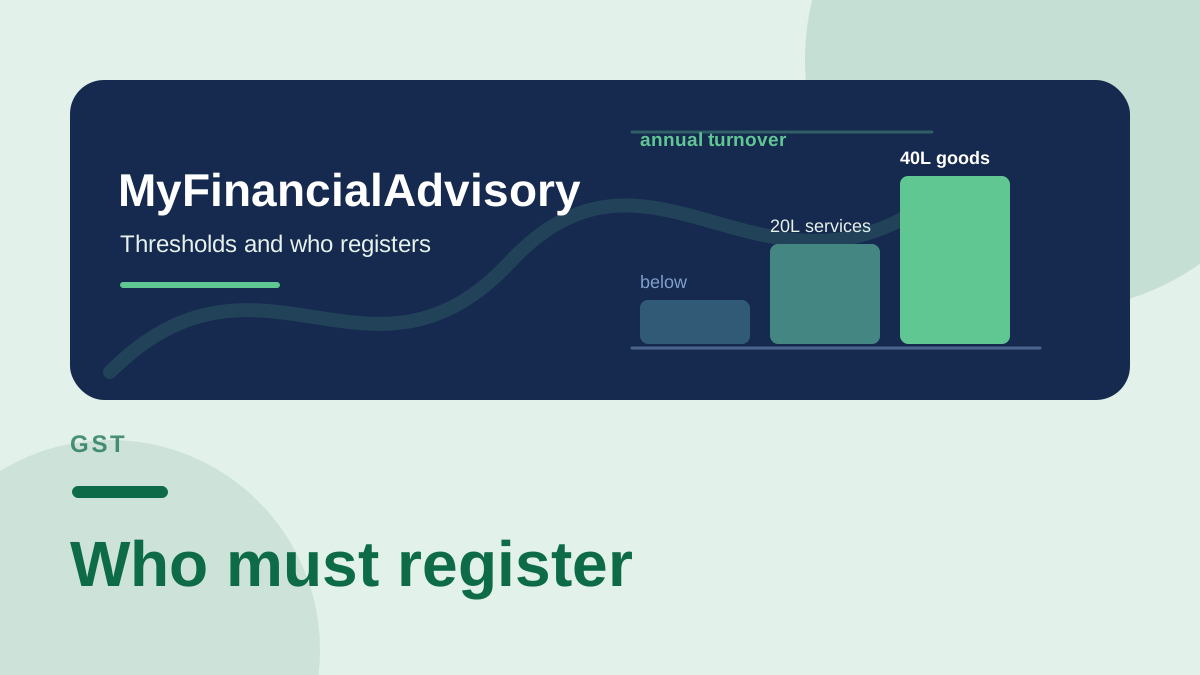
GST Registration for E-commerce Sellers: The Complete Guide
Selling on Amazon, Flipkart or Meesho almost always requires GST — regardless of turnover. Here is why marketplaces need your GSTIN, how TCS works, and what online sellers must file.
GST
GST Registration for Freelancers: Do You Really Need It?
Freelancers and consultants often over- or under-register for GST. Here is a straight answer on when you need it, what export of services means, and how an LUT protects your cash flow.
GST
GSTR-1 vs GSTR-3B: What Is the Difference?
GSTR-1 reports your sales; GSTR-3B is where you pay tax. They must reconcile, and the gap between them is the single biggest cause of GST notices. Here is how they connect.
GST
GST Cancellation and Revocation: A Complete Guide
Cancellation and revocation are opposite processes and confusing them costs time. This sets out both from the Act and Rules — the three-month GSTR-10 deadline and why its late fee is four times the monthly one, the ninety-day revocation window that replaced thirty days in October 2023, the Rule 22(4) proviso that requires proceedings to be dropped, and the section 16(6) credit that only revocation preserves.
GST
GST Registration Fees and Timeline (2026 Guide)
There is no government fee for GST registration, and the CGST Rules say so by saying nothing. Here is the real cost stack component by component, the statutory clocks that decide your timeline, two worked examples, and the one mistake that costs far more than any fee.